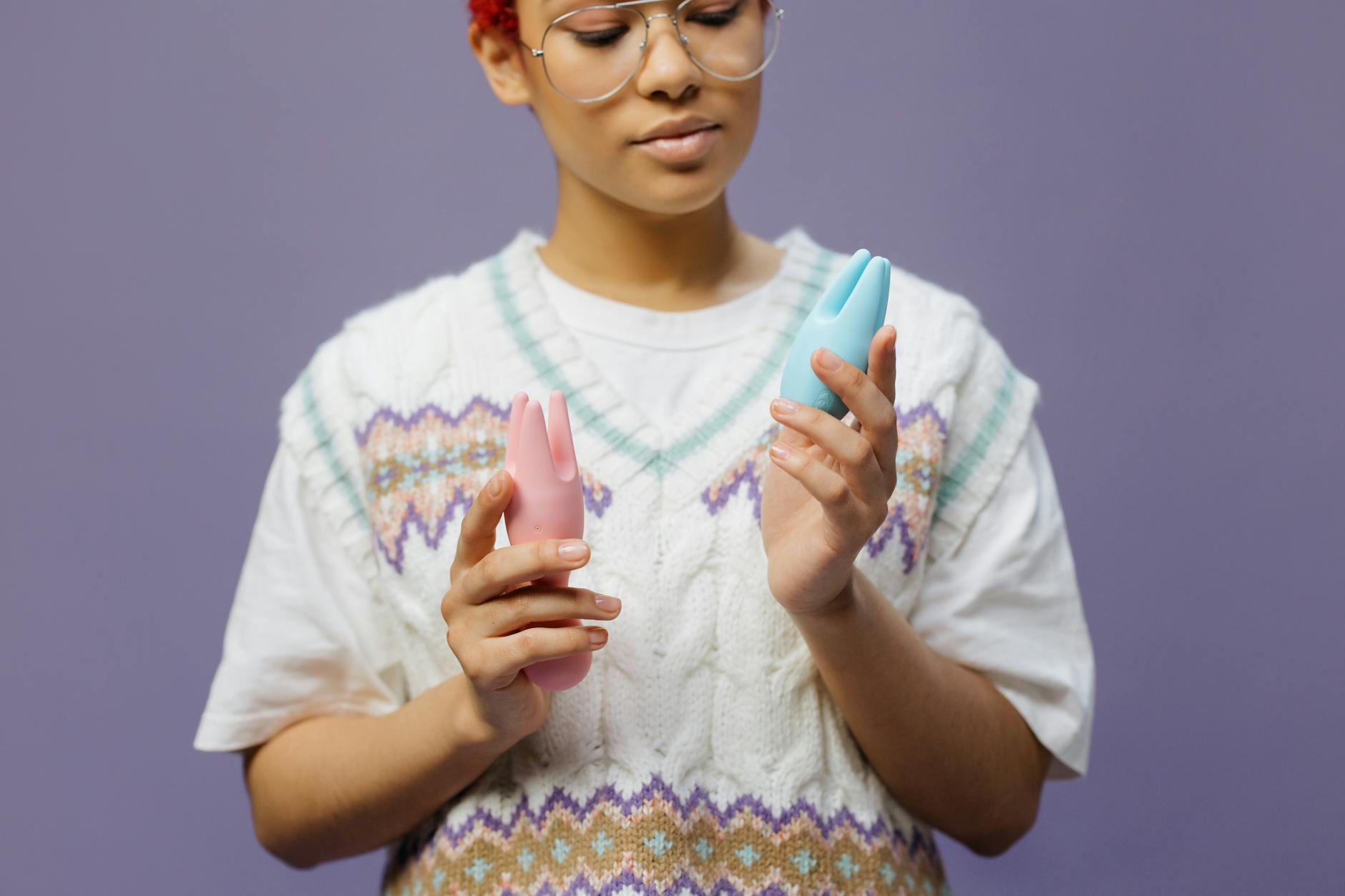
Let's be real about the return
When you haven't had pleasure in a while—whether that's six months, three years, or longer—the idea of diving back in can feel weirdly loaded. You might worry your body has forgotten how. Or you're embarrassed at the thought of relearning something that once felt natural. Maybe you're worried it'll hurt, or feel numb, or just... wrong.
Here's what I see in my practice: almost none of that happens. What does happen is that your nervous system takes a minute to remember. Your tissues need a gentle reintroduction. And you need permission to go slowly without feeling like something's broken. A lemon clitoral vibrator is essentially designed for this exact moment. It's low-pressure, highly specific, and way less intimidating than diving into partnered sex or a full-sized toy.
Why a lemon vibrator is the right choice for starting over
The genius of a lemon clitoral vibrator is its precision. Unlike broader toys that stimulate a wider area, this design gives you focused, consistent stimulation to exactly where you want it. For someone returning after time away, that's crucial.
When sensation has been dormant, generalized stimulation can feel confusing or overwhelming. Your nervous system doesn't know where to focus. A lemon vibrator solves that. It also gives you control—you're holding it, moving it, adjusting the angle and pressure entirely on your terms. There's no performance element, no one else's pace to match. That autonomy is what rebuilds confidence.
Second, the vibration pattern itself. Most clitoral vibrators, including high-quality lemon sucker models, use air-pulse or suction-based stimulation rather than direct buzzing. This creates a gentler, more natural sensation that mirrors how bodies actually respond. You're not jarring tissue that's been quiet for a while. You're inviting it back with something that feels closer to touch than shock.
The nervous system side of returning
Here's something I want you to know: pleasure isn't just physical. A big part of returning to it after a long absence is giving your nervous system permission to downshift out of protective mode.
Whether you stepped away because of relationship loss, grief, depression, medical treatment, or just life pressure, your body learned to stay vigilant. It learned that arousal wasn't a priority. That's not a personal failure—that's actually your body being sensible.
Returning means slowly signaling to your nervous system: "It's safe to feel good again." A lemon vibrator helps because it's:
Low-stakes. You can use it solo, no performance pressure. You can stop whenever.
Specific. Focused stimulation is easier for a quieted nervous system to process than diffuse touch.
Controllable. You set the speed, duration, and intensity. You're in charge the whole time.
Repetitive. Consistent, predictable sensation helps your nervous system feel safe.
Those four things together make returning to pleasure less about forcing your body back online and more about gently teaching it that sensation is available again.
Start with realistic expectations
You might not orgasm the first time. Honestly, you might not the tenth time. That's completely normal and says nothing about your capacity or your future. After a long pause, your nervous system needs time to rebuild the pathway from sensation to response.
What you're likely to feel, even in the first session: a gentle tingling or warmth. Maybe a subtle building sensation that doesn't resolve into orgasm but still feels good. That's already a win. You're teaching your body that pleasure exists.
Some people feel numbness at first. The clitoris has incredibly fine nerve endings, and if they've been quiet, they're slow to wake up. Keep going (gently, no pressure). Over days or weeks, sensitivity usually returns. If it doesn't shift after consistent use over several weeks, mention it to a doctor—numbness sometimes has a medical cause worth checking.
Others get in their head. They watch the clock or worry they're doing it wrong. The moment you notice that, stop. You're trying to rebuild trust with your body, not prove something to it.
Your first session with a lemon clitoral vibrator
Set aside real time. Twenty to thirty minutes, minimum. This isn't rushed. You're not fitting this between emails.
Find a space where you actually feel safe. Not just physically safe, but emotionally—a place where you're not waiting for someone to interrupt, where you're not preoccupied by a task list. Privacy and quiet matter.
Warm up first. You don't need a partner, but you do need your own touch. Spend five to ten minutes on non-sexual touch. Hands on your body, maybe some light stroking of your arms, legs, chest. The goal is to wake up your sensory awareness and tell your nervous system: "We're being gentle here. This is about feeling, not achieving."
Apply water-based lubricant. Even if you think you don't need it, use it anyway. Lubrication isn't a sign of dysfunction—it's a sign you're preparing your tissues well. For returning after time away, it's extra important because thinner or less aroused tissue benefits from the extra glide.
Start on the lowest vibration setting. Don't jump to patterns or high speeds. The lemon clitoral vibrator likely has a gentle pulse option as a baseline. Use it. Hold the vibrator directly against the clitoral area and let it sit there for a few seconds before moving. You're not looking for instant sensation—you're looking for a slow build.
Move slowly. Vary the angle slightly. See what feels best. Some people prefer direct contact with the head of the clitoris. Others like the stimulation on the shaft or the surrounding vulva. There's no right answer—only what your body is telling you right now.
If nothing's happening after ten to fifteen minutes, it's totally okay to stop. You've done the work. Your nervous system got a message: "Pleasure is available if you want it." That's enough for one session.
What to expect over the first week or two
Sessions might feel repetitive at first. Same sensation, same place, not much change. That's exactly right. Repetition is what teaches your nervous system to expect pleasure again.
Sensation might actually feel stronger each time you return. That's your tissues waking up and your nervous system becoming quicker to respond. You're literally rebuilding a neural pathway.
Some people find that combining the lemon vibrator with fantasy or thoughts that turn them on helps. Others prefer a completely blank mental space. Neither is better. What matters is that you're not forcing thoughts or scenarios. If your brain wants to engage, great. If it prefers to just feel, that's equally valid.
Orgasm might take a few sessions or several weeks. I've worked with people for whom it took a month of regular use. Some found it came back in the first few days. The timeline varies wildly and none of it indicates anything wrong with you.
When to keep going and when to reach out
Keep going if: sensation is slowly increasing, you're enjoying the time alone regardless of orgasm, or you're feeling any pleasure building (even if it doesn't resolve).
Reach out to a healthcare provider if: you're experiencing pain, burning, or significant discomfort; you're seeing discharge that seems unusual; or after several weeks of consistent use, sensation feels completely absent. Those things sometimes point to underlying issues—hormonal shifts, nerve health, or something else—that a doctor can actually help with.
If anxiety is making the experience feel harder, that's worth a conversation too. Some people benefit from working with a therapist alongside this reintroduction process, especially if the time away was related to trauma or loss.
When you're ready to bring a partner back in
You don't have to. Solo exploration is its own complete experience. But if you want to share this with someone, timing matters.
Wait until you've rebuilt some sensation on your own first. Once you know how your body responds to the lemon clitoral vibrator, you can show your partner. "This is what works for me right now" is a completely different conversation than "I can't feel anything."
You might introduce the toy into partnered sex—maybe they hold it while touching you, or you use it while they're inside you, or you take turns with it. Or you might find that solo sessions with the toy remain your private thing, and partnered sex stays separate. Both are fine.
The key is that you're in charge of the pace. Not your partner's timeline, not some idea of how quickly you should be "back to normal." You decide when it feels right to expand this back to partnership.
Common questions about returning with a lemon vibrator
Will using a vibrator make it hard for my partner to satisfy me later?
No. The clitoris doesn't become dependent on vibration, and the sensation from partnered touch is completely different. What the vibrator does is help you remember what responsive feels like. That memory stays with you.
How often should I be using this?
As often as feels good. Some people do this daily for the first few weeks. Others prefer a few times a week. There's no "should." The goal is consistency enough that your nervous system registers the message, but not so much that it feels like a chore.
What if I still can't feel much after a month?
Talk to a doctor. Persistent numbness sometimes reflects hormonal changes, medication side effects, or nerve health. It's worth investigating. In the meantime, keep the vibrator in your routine—sometimes sensation catches up over time.
Is it weird that I feel emotional during this?
Not even slightly. Pleasure reconnection often brings up feelings—relief, grief, joy, vulnerability. Your body might be grieving the time away. Let it. Those emotions are part of the healing.
Can I use it with my partner right away?
You can, but most people find it easier to rebuild solo first. Once you know your rhythm and what feels good, sharing that with a partner flows more naturally.
The bigger picture
Returning to pleasure after time away isn't about forcing your body to perform. It's about having a genuine conversation with yourself about what you want now. Whether that's frequent solo sessions, partnered intimacy, or some mix in between—that's entirely your call. A lemon clitoral vibrator is just a tool that makes that conversation easier, gentler, and way less loaded than you might expect. The pleasure you rebuild? That's all you.