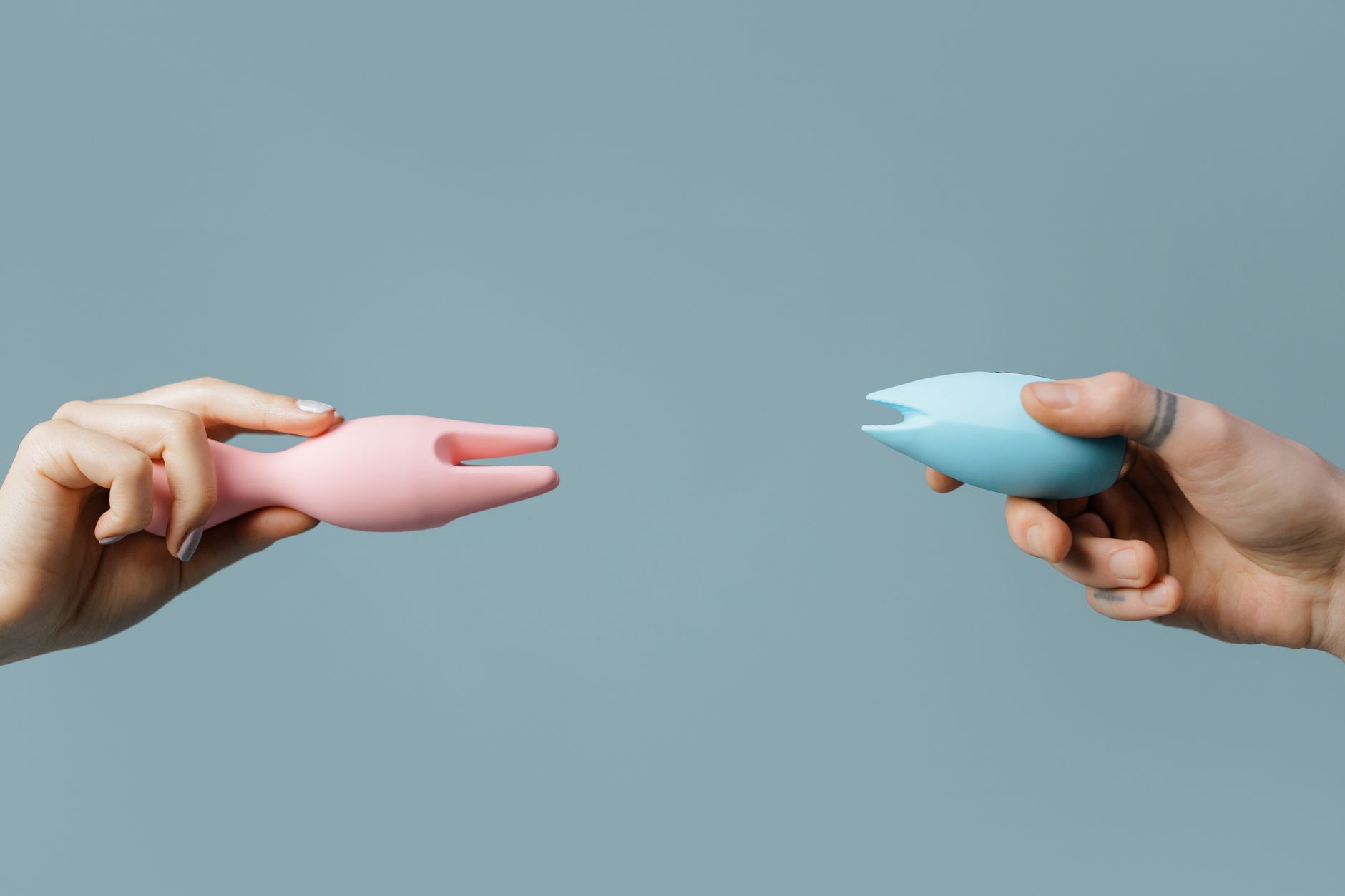
How to Use a Lemon Vibrator When Cycling Hormones Affect Sensation
Your clitoral sensitivity isn't broken. It's just shifting. Here's how to work with your cycle instead of against it, so pleasure stays consistent all month long.
Your clitoral sensitivity isn't static. It shifts dramatically across your menstrual cycle. Some days a lemon vibrator on its highest setting feels transcendent. Other days, the same intensity borders on uncomfortable. This isn't a sign something's wrong. It's your hormones doing exactly what they're supposed to do.
Most people don't talk about this variation because we're taught to expect pleasure to feel the same every time. It doesn't. And once you understand the rhythm, you can stop fighting it and start working with it.
Estrogen and testosterone work like dimmer switches on your nervous system's pleasure receptors. During the follicular phase, right after your period ends, estrogen begins its climb. As it rises, your clitoral nerves become increasingly sensitive and responsive. Blood flow to the area increases. Arousal builds faster. Many people report stronger orgasms during this window.
Then ovulation hits. Testosterone surges alongside estrogen for about 24 to 48 hours. This is often your peak sensitivity window. Your clit feels almost hypersensitive. Direct stimulation can feel intense, sometimes too intense. This is when a lower setting on your lemon vibrator might actually be more satisfying than your usual sweet spot.
After ovulation, progesterone takes over. Estrogen and testosterone drop. Your clit becomes less reactive. Arousal takes longer to build. Orgasms might feel less intense or require more time to reach. Your sensitivity during the luteal phase can be 20 to 30 percent lower than during the follicular phase.
Right before your period, progesterone peaks and then crashes. Many people experience either heightened sensitivity (the hormonal equivalent of a final spark) or complete numbness. This variation is why the same vibrator setting that felt perfect last week can feel either muted or overwhelming now.
Your cycle isn't identical to anyone else's. Start tracking three things over the next two months:
When you use your lemon vibrator, what intensity setting feels best? Mark it in your phone calendar or a period tracker.
How long does arousal usually take that day?
Does the sensation feel sharp and direct, or diffuse and slow to build?
After two cycles, patterns emerge. You'll probably notice that certain days feel "easier" and certain days feel like you need completely different settings to get the same result. That's not a problem. That's your baseline.
Once you know your pattern, you can stop adjusting settings reactively and start planning ahead. It's the difference between "why isn't this working today?" and "ah right, I'm in my luteal phase, so I'm using pattern 2 instead of pattern 4."
Follicular phase (days 1-13 approximately). Your sensitivity is building. Start with lower patterns and work up. You might find that patterns 2 through 4 on your lemon clitoral vibrator feel incredible. Many people report that they can reach orgasm faster during this phase, so you may not need to spend as much time on foreplay. Trust that speed.
Ovulation window (day 14 approximately, though timing varies). This is when you might want to drop back to pattern 1 or 2 even though you "could" handle higher settings. The suction action of a lemon vibrator's design is particularly effective here because you get intense sensation without aggressive friction. Some people find they actually prefer lower patterns during ovulation because the sensitivity is already so high.
Luteal phase, first half (days 15-21 approximately). You're moving into the slower sensitivity phase. Start at a pattern that felt good last week, then bump it up one level. You might need pattern 3 instead of your usual pattern 2. Your arousal will take longer to build, so plan for a longer warm-up period. Penetrative options often feel more satisfying during this phase.
Luteal phase, second half (days 22-28 approximately). Progesterone is peaking, and your sensitivity is at its lowest. You'll probably need to stick to higher patterns than usual. This is also when water-based lubricant becomes especially useful because the vaginal tissue is naturally less lubricated. If you're using your lemon vibrator externally, this is a fine time to do so. If internal sensation matters to you, this phase might call for a different toy altogether, or supplementary stimulation.
The suction action of a lemon vibrator works differently than traditional vibration at different points in your cycle. During high-sensitivity phases like ovulation, suction distributes stimulation across a broader area, which can feel gentler and more blended than direct vibration. During low-sensitivity phases, the same suction action feels stronger because there's less ambient nervousness in the area.
This is why people with cycling hormones often find that a lemon vibrator outperforms traditional vibrators for maintaining consistent pleasure across their cycle. You get the intensity you need without having to completely change tools.
Hormone shifts don't just change your clitoral sensitivity. They also change how your arousal builds and how your body's lubrication works. During your follicular phase, your body produces more natural lubrication. You might not need extra help. During your luteal phase, lubrication drops. This isn't a sign of low desire. It's a sign you should use water-based lube, which keeps sensation consistent regardless of your cycle phase.
Arousel rhythm also shifts. During the follicular phase, you can move from neutral to fully aroused in minutes. During the luteal phase, allow 15 to 25 minutes of foreplay before you expect intense sensation. This isn't laziness or a problem with your body. It's just the shape of your cycle.
Pause and pay attention instead of pushing through. If something doesn't feel great during your luteal phase, it's probably because your body genuinely needs something different right now, not because the toy doesn't work.
If you're on hormonal birth control, your cycle looks different than this pattern. Many hormonal methods suppress the natural estrogen and testosterone peaks that create this variation. You might have much flatter sensitivity across the month. Some people find their pleasure actually improves on hormonal birth control because they don't have to constantly recalibrate. Others find the opposite. There's no universal answer here.
Similarly, if you're on antidepressants or other medications that affect blood flow or nerve sensitivity, your cycle pattern might not match this baseline either. <a href="/blog/how-to-use-lemon-vibrator-when-rebuilding-pleasure-after-medication-side-effects">If medications are changing your sensation, working with a healthcare provider to understand what's happening and then testing with your lemon vibrator is genuinely important.</a> You might need different patterns than someone without your medication profile.
You don't need to overthink this. You just need to notice. Keep a simple note on your phone: what day of your cycle, what pattern, how long it took, how the sensation felt. After two to three cycles, you'll have enough data to predict what you'll want before it happens.
This isn't about optimization. It's about honoring the fact that your body is doing something real and rhythmic, and working with that instead of pretending you should feel the same all month. <a href="/blog/how-to-use-lemon-vibrator-when-arousal-takes-longer-to-build">The more you understand your arousal timeline across your cycle, the easier it is to build pleasure that actually lands.</a>
If you have a partner, naming your cycle sensitivity publicly can transform the conversation. Instead of "I'm not into this today" (which can feel like rejection), you can say "I'm in my luteal phase, so I'm going to use pattern 2 instead of my usual settings." You're giving information, not explaining yourself.
This actually makes partnered sex easier because your partner isn't guessing why your needs have shifted. They understand that your body is cycling, that this is normal, and that meeting you where you are right now is what matters. <a href="/blog/how-to-use-lemon-vibrator-when-solo-but-craving-partner-connection">Whether you're using your lemon vibrator solo or with someone else, the principle is the same: consistent pleasure comes from working with your cycle, not against it.</a>
Completely. Stress, sleep, medication changes, and life circumstances all shift how your hormones affect sensation. The pattern you establish this month might be slightly different next month. That's not a problem. That's why tracking is useful. It helps you recalibrate when something changes.
That's more common than you'd think, especially during the luteal phase if you have naturally lower hormone levels. It doesn't mean your nerves are broken. It usually means you need more time, different stimulation, or a different toy. Sometimes all three. If it lasts beyond your cycle or if it happens with no cycle pattern, checking with a healthcare provider is worth doing to rule out anything else going on.
You don't have to, but many people find it helpful. The lemon vibrator is designed to work across varying sensitivity levels because the suction distributes stimulation differently than traditional vibration. But if you find you want something completely different during your luteal phase, that's also fine. Your pleasure matters more than consistency.
Yes, actually. Many people find that the suction action of a lemon clitoral vibrator feels particularly good during ovulation when sensitivity is highest, because you get powerful sensation without aggressive friction. During lower-sensitivity phases, the same tool still works, you just adjust which pattern you're using.
Yes. Some people find stimulation during menstruation feels amazing. Others find it uncomfortable. The variation is huge. Your first period using a lemon vibrator, pay attention to what your body tells you. If it feels good, keep going. If it feels off, wait a few days. There's no rule here.
Then your body is doing something different, and that's completely fine. Not everyone's hormone cycle looks textbook. Some people have longer follicular phases. Some people have very flat hormone variation. Some people experience sensation changes that don't sync to their cycle at all. The point isn't to match a pattern. The point is to understand your own pattern so you can work with it. Track your own data, not someone else's normal.