Desire isn't supposed to be consistent. If yours fluctuates, shows up some days and ghosts others, or feels stronger in certain seasons of your life, that's not a malfunction. It's normal. The problem is that most of us have internalized the idea that arousal should be steady, predictable, and on demand.
It shouldn't. And trying to force it that way creates the very friction that kills pleasure.
Here's what I see in my practice: people with inconsistent desire often abandon their pleasure tools altogether because they assume a lemon vibrator only works when you're "in the mood." That's backward. A good clitoral vibrator is most useful when desire is unreliable, because it works differently than manual stimulation. It doesn't require your brain to be fully checked in. It doesn't demand that you already be aroused.
Desire fluctuates for about a hundred legitimate reasons, and almost none of them mean you're broken.
Stress flattens it. So does hormonal shift, whether you're cycling, on birth control, perimenopausal, or navigating post-menopause. Sleep debt murders it. So does unresolved conflict, ambivalence about your body, side effects from medications, depression, burnout, and the simple fact that your nervous system is dysregulated from living in a time when everyone is constantly activated.
Relationship stage matters too. New relationships run on novelty and dopamine. Five years in, that chemical advantage is gone, and you're relying on emotional and physical intimacy to create arousal. That's a real transition. It's not the same as desire disappearing.
Then there's the compounding factor: you notice desire isn't showing up, you feel guilty about it, guilt creates tension, tension kills arousal even more, and now you're stuck in a loop.
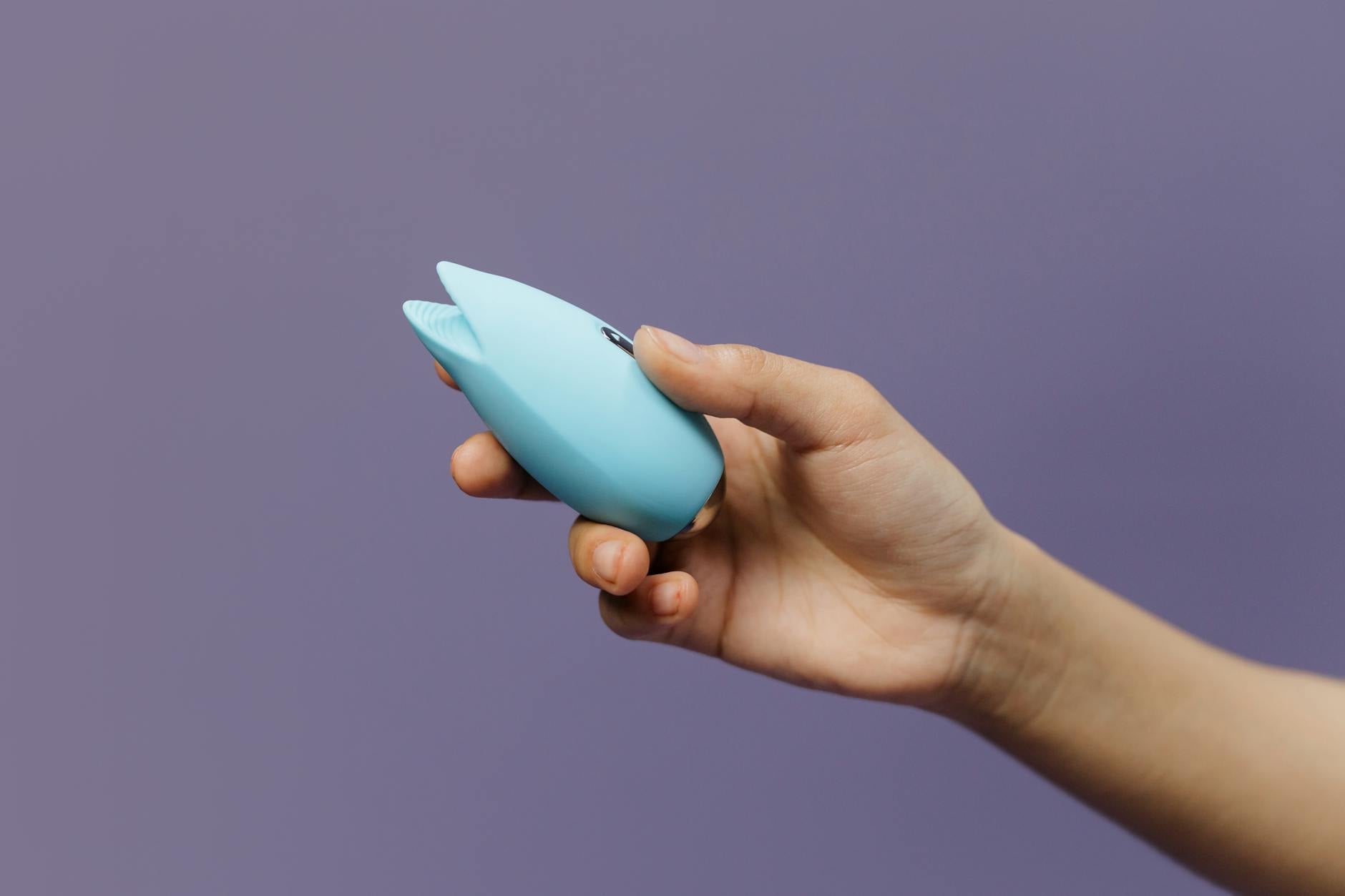
Here's the mechanical truth. A lemon sucker or lemon clitoral vibrator uses air-pulse technology that mimics suction. That matters when your body isn't naturally producing its own lubrication or when arousal takes longer to build.
Manual stimulation requires your whole system to be engaged. You're thinking about pressure, speed, angle, grip. That cognitive load actually suppresses arousal. A vibrator removes that. You're not performing or managing anything. You're just receiving sensation.
Suction stimulation also works on a different neural pathway than direct friction. It stimulates the entire clitoral complex, not just the external tip. That means you can reach sensation and orgasm even when desire feels halfhearted or tentative. You don't need to be fully aroused first. The vibrator can help you get there.
If you're using a lemon vibrator or any lemon sexual toy through fluctuating desire, forget the idea of scheduling sex or pleasure on a fixed day. That's fighting your actual rhythm.
Instead, pay attention to when desire shows up in small ways. Maybe it's a slight warmth in your body during a shower. A fleeting thought about your partner. A moment where you feel present in your skin instead of dissociated from it. Don't wait for the full "I want to have sex right now" feeling. Start there.
That's where a lem vibrator becomes practical. You're not asking yourself "Am I in the mood?" You're noticing the smallest seed of interest and following it. Use the vibrator on lower settings for five minutes. See what happens. Often, pleasure builds once you give your nervous system permission to settle into sensation.
This matters especially if you've had partners who took inconsistent desire personally, or if you grew up with messaging that your body's signals weren't valid. Reclaiming your own pleasure, on your own timeline, with your own clitoral vibrator, is part of rewiring that.
The relationship conversation is separate from the pleasure conversation, and I mean that.
"My desire has been unreliable lately" is not the same as "I don't want to be intimate with you." The first is about your nervous system or hormones or stress or depression. The second is about the relationship. They can coexist, but confusing them turns both problems into dead ends.
If you're partnered, one of the most generous things you can do is make it safe for desire to be inconsistent. That means not interpreting low desire as rejection. It means sometimes one partner uses their lemon clitoral vibrator alone, sometimes together, sometimes not at all, and none of those outcomes are weird.
It also means the low-desire partner stops performing arousal out of obligation. That kills everything. Real intimacy can't grow on a foundation of "I'm doing this because I should." It grows on honesty. "I'm not feeling it right now, but I want to stay close to you" is more valuable than faked enthusiasm.
When desire is light, start on pattern 1 or 2 on a lemon adult toy. Don't jump to intensity.
Your clitoris has about 8,000 nerve endings. You don't need maximum power to activate them. What you need is consistency and permission to take time. Spend 5-10 minutes at a lower setting before increasing. Your nervous system needs time to register what's happening.
Many people with inconsistent desire find that variation in pattern (not just intensity) keeps engagement high. Use one pattern for three minutes, switch to another, cycle back. Your brain is less likely to tune out a changing stimulus than a constant one.
If desire is stronger on a given day, you've already built the skill of recognizing subtle sensation. You can explore higher settings, shorter bursts, or different angles. You have a baseline to work from.
Sometimes low desire is your nervous system's way of saying something is wrong. Not wrong with you. Wrong in the relationship, wrong with your boundary-setting, wrong with stress management, or wrong with how you're being treated.
If desire disappears entirely and doesn't return after a few weeks, if you're avoiding your partner, if pleasure feels painful or anxiety-producing, or if the low desire is paired with other symptoms of depression or illness: that's when you talk to a therapist or doctor, not just a lemon vibrator recommendation.
But the vast majority of fluctuation is just what desire does. It's not linear. It's not constant. And a good clitoral vibrator isn't a cure for that reality. It's a tool that works with your actual desire rhythm instead of fighting it.
If you're menstruating, your desire naturally peaks around ovulation (higher testosterone) and dips before your period (higher progesterone, lower estrogen). If you're on hormonal birth control, you've flattened that natural rhythm, which sometimes makes desire feel more consistent but also sometimes makes it feel more muted overall. Stress, sleep, and emotional closeness to your partner also swing desire up and down week to week. This is biology, not brokenness.
Yes. That's actually the best use case. Lemon sexual toys don't require pre-existing arousal the way manual stimulation does. The suction sensation can help your body shift into arousal even if your brain isn't fully there. Start on a gentle setting, give yourself 5-10 minutes, and notice what happens. Arousal often follows sensation, not the other way around.
Not if you're clear about what it is. "I want to use my vibrator, and I'd like you here with me" is different from "I'd rather use my vibrator than be with you." The first is expanding pleasure. The second is avoidance. Most partners feel more included and less anxious when you're straightforward about what helps you. If your partner is insecure about vibrator use, that's worth talking through, because that insecurity will probably show up in other intimacy conversations too.
Sometimes, yes. But most of the time, no. Desire naturally shifts as relationships mature, as life gets harder, as bodies age. The question isn't "Do I have constant desire?" It's "Do I feel safe? Do I feel seen? Can I be honest about what I need?" If the answer to those is yes, inconsistent desire is just a thing you work through together. If it's no, that's the actual problem.
Partially. Many medications that treat depression or anxiety also flatten libido, and that's a real trade-off. A lem vibrator can sometimes help by making pleasure accessible without requiring your brain to generate arousal on its own. But if medication is suppressing desire, talk to your prescriber. Sometimes adjusting timing or dosage helps. Sometimes switching medications helps. A vibrator is a workaround, not a solution to that particular problem.
Because your nervous system needs safety before it can open into vulnerability. Desire requires trust at a nervous system level, not just intellectual trust. If there's unresolved conflict, your body knows. You can't fake your way through that with a vibrator. The vibrator works better once you've actually repaired the rupture.
Inconsistent desire is not a problem you solve. It's a reality you learn to work with. A lemon vibrator isn't a magic fix. It's a tool that reduces the friction between your actual desire rhythm and the expectation that you should always be ready.
Your pleasure matters. Your body's signals matter. And you deserve intimacy that fits your rhythm, not a rhythm that fights your body.
If you want to explore how lemon clitoral vibrators might work for you, start with the gentlest settings, give yourself permission to take time, and notice what your nervous system actually needs. That's where the real work begins.
Need help figuring out what tool might work for your body? Get in touch.