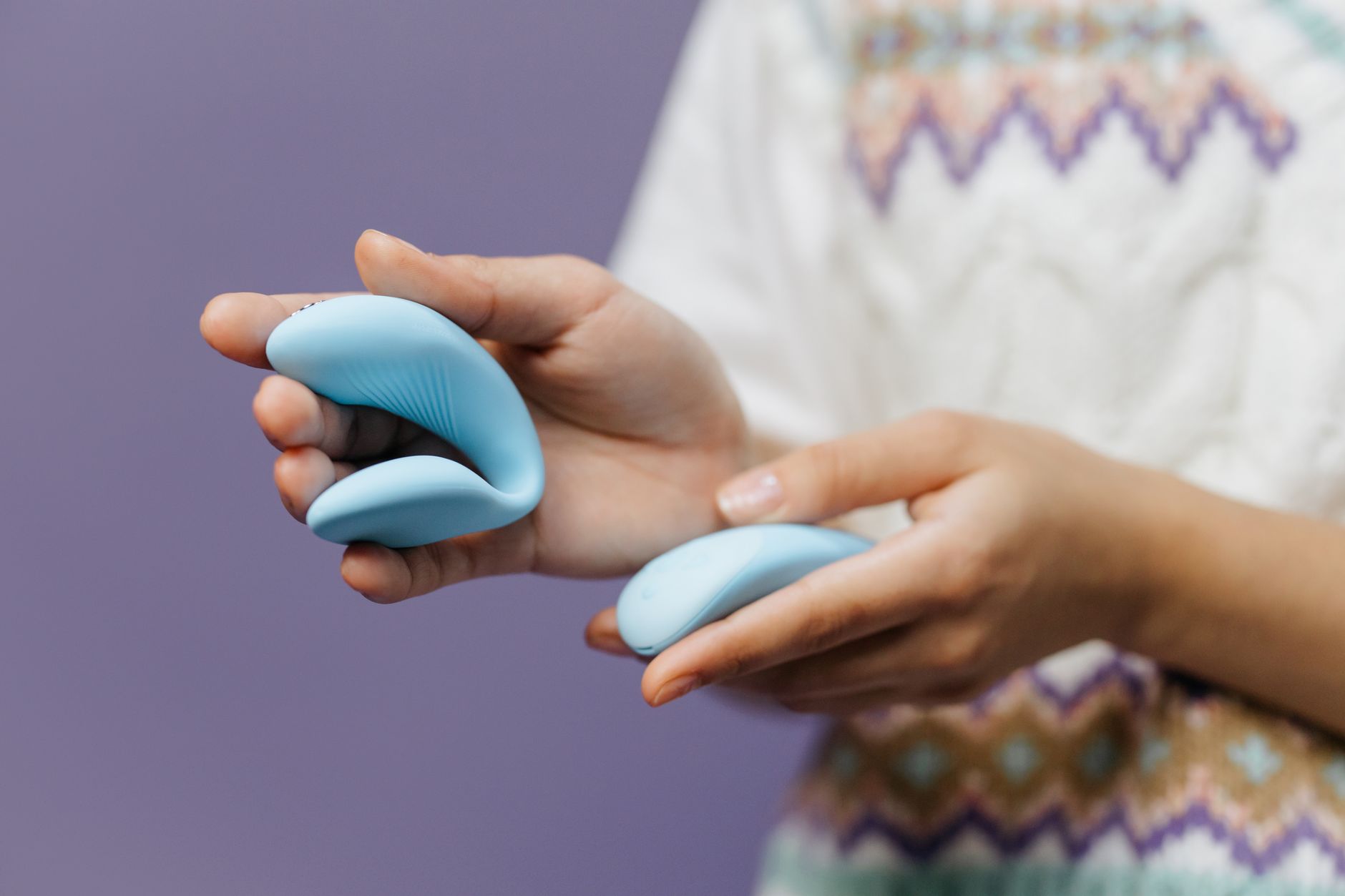
There's a difference between not wanting sex and your nervous system rejecting the touch that leads to sex. One is desire. The other is dysregulation. Most people confuse them, and most advice assumes you're the first when you're actually the second.
If light touch makes you flinch, if vibration feels like static shock instead of pleasure, if direct stimulation sends you into fight-or-flight, a lemon vibrator might actually be the tool that finally makes sense. Not because it's magic. Because air-suction technology works differently on your nervous system than traditional vibrators do.
Direct vibration sends rapid-fire stimulus signals to your nervous system. When your system is already overloaded (from stress, trauma, medication, health conditions, or just life), each pulse feels like an intrusion instead of a pleasure. The clitoral nerve density, which is supposed to be exquisite, becomes a liability. Every sensation is amplified, and amplification feels like noise.
This happens more than you'd think. Anxiety disorders, ADHD, autism spectrum traits, past sexual trauma, hormonal shifts, chronic pain, some antidepressants, and just chronic stress can all make your nervous system hypersensitive. You're not broken. Your system is protecting you.
Here's the key difference: a lemon clitoral vibrator uses rhythmic air-pulse technology instead of direct mechanical vibration. It creates pressure waves rather than contact friction. That's not a small distinction. For an already-activated nervous system, it's the difference between feeling pursued and feeling held.
When you place a lemon vibrator against the clitoris, it doesn't rattle against tissue. It creates a gentle seal and pulses rhythmically, stimulating the nerve endings through indirect pressure rather than direct contact. The sensation is more diffuse, less localized, less immediately intense.
This matters for three reasons:
First, the signal is cleaner. Your nervous system receives information about sustained pressure and rhythm, not thousands of tiny shocks per second. For a dysregulated system, that's like the difference between a steady hum and a strobe light.
Second, you control the intensity differently. With traditional lemon sexual toys, intensity jumps are binary. On or off, speed 1 to speed 3. With the Lem's air-suction design, you can hover at lower intensities for longer without the sensation feeling inadequate. You're building arousal from a steadier baseline.
Third, there's less chance of overstimulation. Because the technology doesn't create peak-and-valley stimulus (the way vibration does), your nervous system doesn't get pushed into the red zone and then crash. You can maintain a plateau longer.
If your nervous system is sensitive, environment matters as much as the toy itself. Here's what I tell clients:
Start with your space, not your body. Dim light, no sudden noises, a space you've prepped. Nervous system regulation isn't sexy, but it's foundational. Your brain has to feel safe before your body can let go.
Second, warm up your system before you warm up physically. That might mean ten minutes of breathing, a shower, tea, lying in a specific spot that feels contained. The goal is to shift your nervous system from vigilant to curious. You'll know it's working when your shoulders drop and your jaw relaxes.
When you're ready to use a lemon clitoral vibrator, start at the lowest setting. Not because you're gentle with yourself (though you are), but because your goal is to build sensation, not spike it. Hold the Lem gently against your labia or clitoris without pressing. Let the pulse do the work. Your instinct will be to increase intensity immediately. Don't. Give yourself five to ten minutes at level one.
If your nervous system feels activated (racing heart, held breath, scattered thoughts), pause. The goal isn't orgasm. The goal is to prove to your body that this touch is safe and controllable. That takes time.
If touch aversion shows up specifically in sexual contexts but not elsewhere, or if it escalated after a relationship event, that's different from baseline sensory sensitivity. That's your nervous system protecting you from something. Pushing through it with a better vibrator won't solve it. A therapist might.
That said, sometimes a tool that lets you stay in control and experience pleasure on your own terms is actually part of healing. The Lem won't fix trauma, but it can create a space where you practice feeling safe in a sexual experience. That's not nothing.
For people with ADHD or autism, lemon adult toys often feel more manageable because the sensation is less "noisy." The rhythm is steady. The intensity is predictable. Your brain can focus on sensation instead of managing chaos.
Here's what my clients with sensory sensitivity often report: once they find a way to experience pleasure without overwhelming their system, their desire actually increases. That seems backwards, but it makes sense. Your body was rejecting pleasure because pleasure felt dangerous.
When you experience arousal and satisfaction without dysregulation, something shifts. You stop bracing against the experience. You actually let yourself want it. The next time you approach a lemon sucker or any clitoral vibrator, you're not fighting your own nervous system.
This also changes partner sex, if that's relevant to you. When you understand your own threshold and how your body actually works, you can communicate that to a partner. "I need lower intensity and more time to warm up" stops being vague and becomes data. Your partner stops interpreting your sensitivity as rejection and starts understanding it as information.
Lubricant matters more when you're starting slow. Water-based lube reduces friction and makes the sensation smoother. Some people find that switching between the vibrator and hand stimulation helps, because the change in sensation keeps the nervous system from habituating.
Timing also matters. Your nervous system is different in the morning versus evening, on high-stress days versus calm ones. There's no universal best time, but paying attention to when your system feels most resourced will help you set yourself up for actual pleasure instead of performance.
The Lem isn't a cure for a dysregulated nervous system. But lemon vibrators designed with air-suction technology let you experience pleasure in a way that doesn't trigger fight-or-flight. That matters. That changes things.
Direct vibration sends rapid stimulus pulses that your nervous system can interpret as threat when you're already activated. Air-suction creates diffuse pressure waves that feel more sustained and less intrusive. Think of the difference between someone tapping your shoulder repeatedly versus holding your arm steadily. The pressure is similar, but the signal is totally different.
Yes, and often more successfully than other tools. Because the Lem doesn't require deep insertion and the sensation is less intense, it feels less triggering. That said, if your touch aversion is tied to trauma, working with a trauma-informed therapist alongside any tool is the right approach. The vibrator is one part of healing, not the whole thing.
There's no universal timeline. Some people spend two weeks at setting one before moving to setting two. Others feel comfortable moving faster. The point isn't to rush. The point is to create a pattern where your nervous system learns that pleasure is safe and you're in control. That learning sticks with you even after you move to higher intensities.
Completely normal. Your nervous system is used to either off or chaos. The middle ground feels boring because it's unfamiliar. Give it time. Arousal builds differently when you're not spiking your nervous system. You'll notice a shift in sensation quality after five to ten minutes, not an immediate high.
Absolutely. Tell your partner that you need lower intensity, longer warm-up, and possibly breaks. Having your partner hold the toy while you control the placement and intensity can feel safer than self-directed use, because there's a human presence and consent negotiation built in. Some people find partnered use less activating because the shared experience of taking time feels different.
If you started an antidepressant, antihistamine, or other medication and sensitivity increased, talk to your prescriber about timing. Some medications are easier on sexuality if taken at night. Some work better at a lower dose. Some need an adjustment period. A lemon vibrator can help you explore what works during that adjustment, but don't assume the tool fixes a medication side effect. Your doctor's input matters.
Everything I've written assumes you're willing to slow down. That's not a small ask in a culture that treats speed as a virtue. But here's what I've learned after years of working with couples navigating sensory sensitivity: the people who heal their relationship to pleasure are the ones who stopped treating sex like a performance metric and started treating it like a conversation with their own nervous system.
A lemon clitoral vibrator lets you have that conversation. Not because it's a magic object, but because it's designed to work with a regulated nervous system instead of against it. That's actually revolutionary. And it's worth taking your time to find.