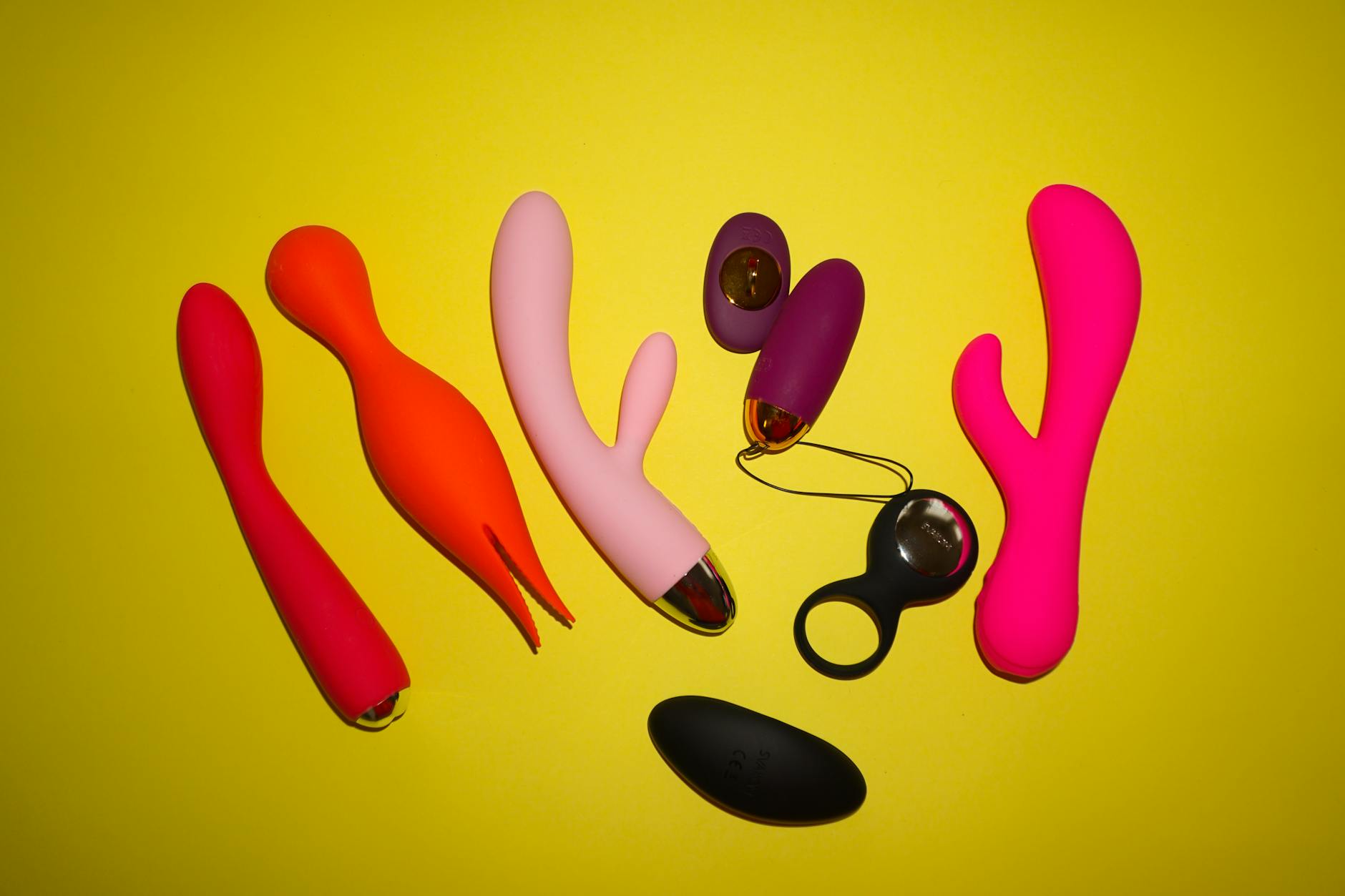
How to Use a Lemon Vibrator for Pleasure With Low Desire From Aging
Aging changes desire and arousal speed. Here's what's actually happening, why it matters, and how lemon clitoral vibrators can help you reclaim pleasure.
Desire doesn't vanish as you get older. It just gets quieter. That matters because most of what you hear about sex and aging splits into two equally unhelpful camps. Either "your best days are behind you" or "it's all the same, don't overthink it." Neither is true, and both leave you stuck.
The actual shift is physiological and fixable. Your body changes. Your arousal pathway changes. But your capacity for pleasure? That's still there, often stronger than it's ever been.
I've worked with countless people in their 50s, 60s, and beyond who've rediscovered sex as genuinely satisfying for the first time. Not because they got lucky. Because they stopped expecting their body to work like it did at 30 and started working with what they actually have now.
Arousal takes longer to build. In your 20s, desire might spike fast. At 55, the same trigger that worked for decades might barely register for five minutes. This isn't dysfunction. It's a shift in neural response. Your brain is still interested. The chain reaction just has a longer fuse.
Blood flow changes. Aging affects how quickly blood reaches the genitals, which means swelling and engorgement happen more gradually. Tissue also becomes more sensitive to friction and less forgiving of rough stimulation. This is why air-suction toys like the Lem work so well for aging bodies. They stimulate through pressure and suction rather than direct friction, which feels better and causes less irritation.
Lubrication shifts. Declining estrogen (whether from menopause, certain medications, or natural aging) means less natural lubrication. This doesn't mean you're broken. It means water-based lube becomes a tool, not a sign something's wrong.
Here's the part nobody mentions: many people report that orgasms after 50 feel different in ways they prefer. Less urgent. More diffuse. Sometimes multiple waves instead of one peak. That's not decline. That's evolution.
There's a difference between your capacity for pleasure and your spontaneous desire. As you age, spontaneous desire (that bolt-from-nowhere feeling) often decreases while responsive desire (arousal that builds with touch and attention) stays stable or even increases.
This matters because most people treat fading spontaneous desire as a problem to fix rather than a shift to understand. You're not losing your sex drive. You're moving from "I suddenly want sex" to "I want sex once we start." That's actually a useful adjustment, because it means pleasure becomes something you can create with intention.
Stress, relationship patterns, and self-doubt also pile on here. If you've spent 30 years believing desire "should" feel automatic, aging gives you permission to stop waiting for it to arrive and start creating it instead.
Lemon clitoral vibrators like the Lem are engineered for bodies that need gentler, more sustained stimulation. Here's why they work particularly well as desire shifts with age:
They don't require you to build arousal first. With traditional vibrators, you often need to be somewhat aroused already. The Lem's suction mechanism works even on a calm clitoris. You can start at low intensity and let arousal build gradually, which matches how your body actually responds now.
They're low-friction. Aging tissue benefits from suction and pressure over direct vibration. This means less irritation, less numbness from overstimulation, and often easier, more satisfying orgasms.
They feel different than what you've tried before. If you've spent decades with one type of toy and pleasure has faded, novelty itself can wake up your interest. A lemon sucker offers a completely different sensation pathway, which sometimes resets your nervous system's response.
Schedule it. I know that sounds unromantic. But if your spontaneous desire is quieter now, planning actually gives you permission to focus. You're not waiting for lightning. You're creating space for pleasure to build. Set an hour where you're not tired, not distracted, and your partner (if you have one) is on the same page.
Start with touch before the toy. Spend 10 to 15 minutes on non-genital touch first. Your neck, your inner thighs, your breasts. Let your nervous system register that this is pleasure time. Then introduce the Lem at a low setting.
Use it on your own first. If you're partnered, solo exploration matters. You'll learn what speed and suction level actually work for you now, which takes pressure off during partnered time. You'll also remember what pleasure feels like independent of performance.
Expect the warm-up to be longer. You might need 20 to 30 minutes of stimulation before orgasm arrives. That's normal. That's not a problem to rush through. That's the experience now. Make space for it.
Here's the thing I see most often: aging bodies aren't the real problem. Self-consciousness is.
You've absorbed decades of messaging that desire is supposed to be spontaneous, that your body should work a certain way, that aging means decline. Then your body does something different and you interpret it as failure instead of adaptation.
One client told me she felt broken because she needed lube and longer warm-up times. We talked about how a distance runner's body changes over time. They don't run the same 10K at 55 the same way they did at 25. Their body is still a runner. The pace just changes.
Sex works the same way. Your body isn't broken. It's training at a different intensity level.
If you're partnered, the conversation matters. "My body works differently now and I'd like to explore what that feels like" is completely different from "I think there's something wrong with me." The first conversation opens doors. The second closes them.
Lube choice. Use water-based only with silicone toys like the Lem. Apply it generously. You need more than you probably think. Wet is better. It lets the toy work properly and feels exponentially better.
Positioning. Find what's comfortable for your aging joints. Lying on your back with a pillow under your lower back works well. Some people prefer semi-reclined against pillows. Don't fight gravity. Work with your body.
Environment. Dim lighting, a locked door, zero phone. Your older nervous system is more sensitive to interruption and distraction. Create conditions where you can actually settle in.
If pain appears, see someone. Pain during or after sex isn't normal at any age and usually has a fixable cause. A gynecologist trained in aging bodies can often help in weeks.
If desire has completely flatlined and nothing is shifting after a few months, talk to your doctor. Sometimes it's medication. Sometimes it's thyroid. Sometimes it's depression. There's no shame in checking.
If you're grieving the way sex used to feel, that's also real and worth acknowledging. You can simultaneously embrace what pleasure is now and mourn what it was. Both things are true.
Aging and low desire isn't the end of your sexual life. It's a plot twist. And plot twists, if you pay attention to them, often make the story better.
Your body has changed. Your wants might have shifted. Your timeline definitely has. But your right to pleasure? That's nonnegotiable.
Start small. Be patient with yourself. Let lemon clitoral vibrators work with your body instead of against it. And give yourself permission to discover what pleasure actually feels like now, without comparing it to then.
It varies, but expect 15 to 30 minutes from zero arousal to orgasm. That's completely normal now. Your nervous system just works at a different pace. The key is not treating that time as wasted waiting. It's the experience itself. Slow arousal actually tends to feel deeper and more satisfying than quick peaks, if you stop fighting it.
Yes, often significantly. Regular pleasure seems to wake up your nervous system's responsiveness. It's like training a muscle. The more you engage with pleasure intentionally, the easier it becomes to access. A lot of people find that after a few weeks of regular use, arousal starts arriving faster and desire feels less foreign.
If you're partnered and you want that partnership to include sex, yes. Here's why. Your partner might feel threatened if they don't understand what's happening. You might feel guilty and pull away. Instead, frame it as exploration that could help you both. "I'm learning what feels good now" is honest. You can invite them to participate or not. Either way, transparency builds connection instead of distance.
Not completely back to what it was at 30, probably. But it can shift significantly. The goal isn't reversing aging. It's reconnecting with pleasure in a way that actually works for your body now. Most people find that once they accept the shift and work with it instead of against it, desire feels stronger and more authentic than it did when it was forced and automatic.
Completely normal. Declining estrogen means less natural lubrication. This happens to most aging bodies with vulvas. It's not a sign of dysfunction. It's just physiology. Using lube generously is the fix. Water-based works best with silicone toys. Honestly, better lube often makes everything feel better, regardless of age.
Timing matters. If it shifted gradually over several years, aging is likely part of it. If it dropped suddenly, something else might be going on. Talk to your doctor if it happened fast. Also consider stress, medication changes, relationship dynamics, and how you feel about your body. Low desire is usually multifactorial. Aging is often one thread in a bigger pattern.
Start at pattern 1 or 2 (the gentlest). Let arousal build there for several minutes. Move to pattern 3 or 4 if you want more intensity. Most aging bodies prefer the lower to mid-range patterns. You might find a setting you love and never change it, which is fine. There's no rule that you need to escalate. If pattern 2 works, pattern 2 is perfect.