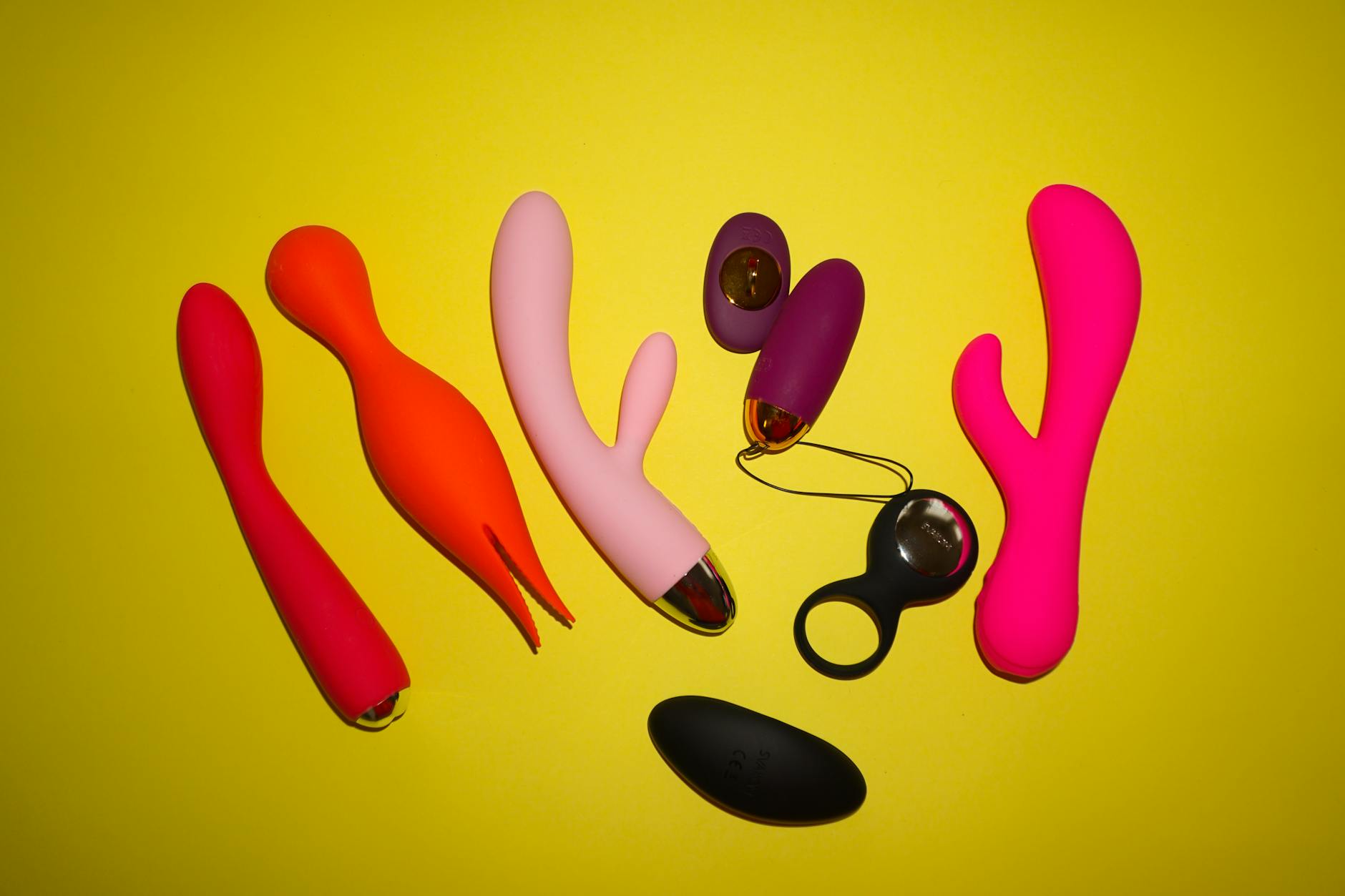
How to Use a Lemon Vibrator When Anxiety Interferes With Pleasure
Anxiety doesn't just kill the mood. It hijacks your whole nervous system. Here's how the suction-based sensation of a clitoral vibrator can help you bypass the mental loop and find your way back to pleasure.
Anxiety doesn't make you less interested in pleasure. It convinces your body that pleasure is dangerous. Your sympathetic nervous system, the one that handles fight-or-flight, stays activated. Blood flow redirects away from your genitals and toward your limbs. Your pelvic floor tightens. Your breathing gets shallow. Your mind loops through worry instead of sensation. You're physically present but mentally nowhere.
This is not a character flaw. It's a nervous system doing exactly what it evolved to do.
The problem is that willpower doesn't fix it. Telling yourself to "just relax" doesn't work because relaxation isn't a thought. It's a physiological state. Your body needs a pathway back to parasympathetic activation, the rest-and-digest mode where pleasure actually happens.
Most vibrators rely on rapid oscillation, which some people with anxiety find overstimulating. Your nervous system is already in overdrive. More vibration can feel like more chaos.
The Lem vibrator works differently. Suction-based stimulation (sometimes called air-suction or pulsation) creates a rhythmic pressure that mimics the natural build of arousal without the jarring intensity of a traditional vibrator. Think of it less like a jackhammer and more like a breathing partner. Your nervous system reads this rhythm as safe.
Here's the clinical angle: rhythmic stimulation activates your parasympathetic nervous system. It's the same principle behind why box breathing works, why bilateral eye movement helps trauma processing, why walking helps anxiety. Your brain recognizes the pattern and downregulates threat perception.
With a lemon clitoral vibrator, you're not just getting stimulation. You're giving your nervous system permission to settle.
If anxiety has been interfering with your pleasure, the last thing you need is to pressure yourself to perform or reach orgasm on schedule. The goal here is sensation, not outcome.
Begin on the lowest setting. I recommend starting with pattern one or two on the Lem. Spend 5-10 minutes there, focusing on what the suction feels like without pushing toward climax. Your job is to notice: Does this feel good? Does my body feel safer? If yes, stay with it. If not, adjust the intensity or take a break.
Many people with anxiety-driven pleasure blocks find that lower settings actually feel better because there's less sensory noise. You can concentrate on the rhythm instead of fighting the intensity.
Pace yourself. If you typically masturbate for 3 minutes, try 15. Give your nervous system time to recognize this as a safe activity. Arousal builds slower when anxiety is in the mix, and that's not wrong. That's normal.
Your nervous system is pattern-recognition software. It learns what situations are dangerous and what situations are safe based on repetition. Right now, it may have learned that sexual situations equal anxiety. You need to reprogram that.
Create a small ritual before using your lemon sucker. Light a candle. Make tea. Put on a specific playlist. Close the bedroom door. Tell your partner you need 20 minutes. The ritual isn't luxury. It's a signal to your body that this is a protected space.
The beauty of the Lem vibrator is that it's discrete. If you want to use it while sitting in bed fully clothed with your legs crossed, you can. If you want to use it with a partner in the room reading, you can. The control is yours. That autonomy itself reduces anxiety.
Once your body learns that this 20-minute window is consistently safe, arousal will start to precede the anxiety. Your nervous system will recognize the ritual and begin downregulating automatically.
This is the move that changes everything. Most people hold their breath during sexual activity, especially when anxiety is involved. Breath-holding signals threat to your nervous system. It tells your body "this is dangerous." You're literally sabotaging yourself.
Instead, try box breathing: inhale for four counts, hold for four, exhale for four, hold for four. Do this for 2-3 minutes before you start. Your nervous system downregulates immediately.
Then, while using the Lem vibrator, keep your breathing steady and deliberate. Not forced. Just consistent. If you find yourself holding your breath (which most anxious people do), gently remind yourself: exhale. Your diaphragm relaxing is your cue to your nervous system that you're safe.
Many clients tell me that this single change, the deliberate breathing, has made more difference than the vibrator itself. The vibrator is the tool. Your breath is the signal.
If you have a partner, involving them requires a conversation that isn't about sex. It's about anxiety.
You might say: "My anxiety has been getting in the way of pleasure. I'm working on rewiring how my body responds to stimulation. It would help if you were in the space but not necessarily involved. Your presence matters, but your performance doesn't."
This shifts the dynamic from "I'm broken" or "you're not doing it right" to "I'm taking care of my nervous system, and your support helps." Many partners find this clarifying. They get to stop guessing and start supporting.
Some couples find that using a lemon clitoral vibrator together actually reduces anxiety because there's no performance pressure. One partner uses it while the other simply holds space, maybe touches their arm, maybe talks softly. The vibrator becomes a bridge instead of a barrier.
Here's what typically happens: Anxiety shows up. You decide not to have sex or use a vibrator because anxiety is present. That decision gets reinforced. Next time anxiety appears, you avoid again. Your nervous system learns: "When I'm anxious, there's no sexual pleasure available." The loop deepens.
Using a lemon vibrator while anxious breaks the pattern. Your nervous system learns: "Even when I'm anxious, pleasure is available. My body can access both." This is a crucial rewiring.
You might not reach orgasm the first few times. That's fine. The goal is nervous system recalibration, not climax. Once your body trusts that sexual situations can feel safe, orgasm returns naturally.
You'll notice small signs before big changes. You might use the Lem vibrator and feel a slight warming in your body instead of the usual shutdown. You might notice your jaw unclenching or your breathing evening out. You might feel curious or playful instead of pressured.
These micromovements matter. They're your nervous system saying "okay, I'm learning to trust this."
After 2-4 weeks of consistent use, anxiety might not disappear entirely, but it will feel less intertwined with pleasure. That's the realistic win. You're not eliminating anxiety. You're decoupling it from sex.
If you've been using a lemon clitoral vibrator regularly for 4-6 weeks and anxiety still dominates, it's worth talking to a therapist who specializes in somatic (body-based) anxiety work. Cognitive behavioral therapy, somatic experiencing, or sensorimotor psychotherapy can all help rewire the nervous system faster.
A vibrator is a powerful tool. It's not a replacement for professional support if trauma or severe anxiety disorder is at play. But for garden-variety performance anxiety or stress-related pleasure blocks, the combination of nervous system awareness and the right tool often works remarkably well.
Your clitoral vibrator isn't just for pleasure. It's permission. Permission to reclaim a part of yourself that anxiety has been gatekeeping. The Lem vibrator, with its rhythmic suction-based stimulation, makes that reclamation feel safe instead of forced. That's the difference between willpower and nervous system work. One exhausts you. The other heals you.
No, but it can feel that way. Anxiety dampens blood flow to your genitals, makes your pelvic floor tense, and floods your brain with worry instead of sensation. This doesn't break your capacity for pleasure. It just blocks the pathway. A lemon vibrator, combined with breathing work and nervous system awareness, reopens that pathway. The sensation is still there. Anxiety is just sitting in the way.
This varies, but most people notice a shift within 2-3 weeks of consistent use. Some feel it immediately. Others need 4-6 weeks before they trust that the pattern is changing. The key is consistency, not intensity. Using a lemon sucker twice a week is more effective than one marathon session if anxiety is your issue.
Before bed can work well because it's a natural transition into rest mode, which is when your parasympathetic nervous system activates anyway. But if you're tired, you might fall asleep. Many people find midday or early evening works better because you have mental space to focus on sensation without drowsiness competing. Experiment and notice what your nervous system prefers.
Not if you're using it mindfully. If you're white-knuckling your way through a session while still in full anxiety mode, you might reinforce the anxiety-pleasure connection. But if you're using it with breathing work and nervous system awareness, it retrains your body that pleasure is safe. The difference is intentionality.
Yes. In fact, the whole point is to disconnect pleasure from orgasm as an outcome. If you've been anxious during sex, you've probably made orgasm a performance metric, which increases pressure and deepens anxiety. A clitoral vibrator used without orgasm as the goal is one of the fastest ways to rewire that. Focus on sensation. Orgasm will follow once your nervous system trusts the environment.
That's common, especially if you were raised with shame around sexuality or pleasure. Start even smaller. Just hold the Lem vibrator without turning it on. Notice what thoughts come up. Sit with that for a few days. Then turn it on with your clothes on. Build familiarity gradually. Your nervous system will tell you when it's ready to move to the next step. Respect that pace.
If you have a sex-positive therapist or one trained in somatic work, yes. They can help you connect the nervous system dots and accelerate the rewiring. If your therapist isn't comfortable discussing sex or vibrators, that's useful information about whether they're the right fit for this work. You deserve support that honors all of you, including your sexuality.