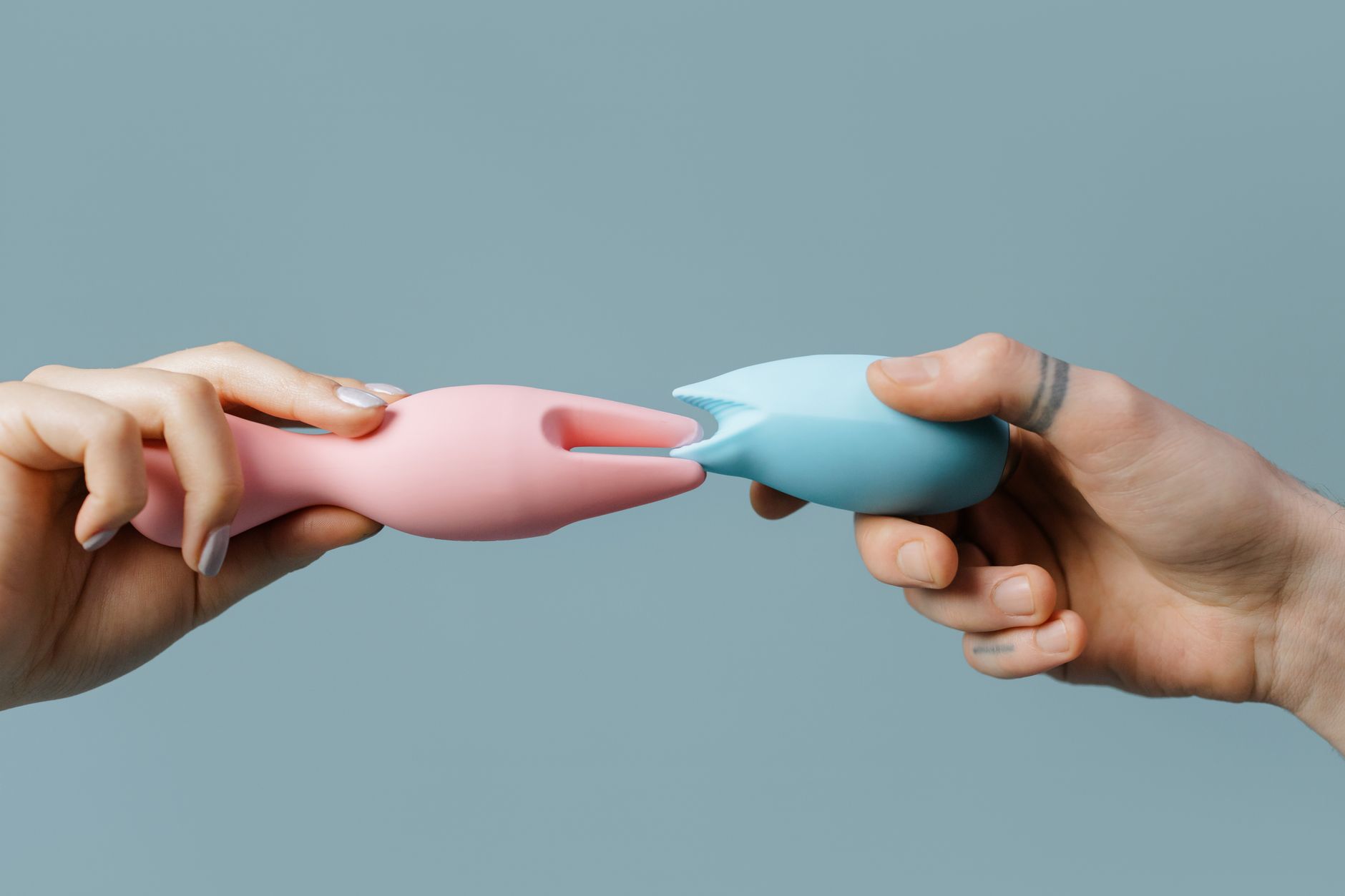
You and your partner want different things from your lemon vibrator, or clitoral vibrators in general. One person loves that slow, deliberate pulse. The other person is looking for rapid stimulation that builds fast. Neither of you is wrong. This is one of the most common points of friction in partnered play, and it's usually the easiest to solve once you actually name it.
The good news: a lemon vibrator's multiple speed settings exist for exactly this reason. What's less obvious is how to actually use them together without compromise feeling like someone loses.
Here's what I see in my practice. Partners show up thinking the intensity difference means something is broken about their desire or their relationship. It doesn't. It means you have different nervous system responses to stimulation. Some people's bodies need gradual buildup. Others reach peak arousal faster and want intensity to match that pace. Both are normal.
The clitoral structure actually supports this. The clitoris has about 8,000 nerve endings concentrated in a small area. Speed preference is partly about how sensitive those nerves are on a given day, partly about what your arousal cycle looks like, partly about what your brain is doing (stress, attention, confidence). None of that is fixed.
What changes is permission. Once you stop treating the speed mismatch as a problem to hide and start treating it as useful information, everything gets easier.
1. The trade model: you get your setting, then they get theirs.
This sounds simple, and it is. You use the vibrator at your preferred intensity for as long as you need (usually 5-15 minutes depending on arousal). When you're close to or at the point of no return, you hand off. Your partner takes their turn at their speed, with you either using fingers, your mouth, or your own touch to keep them engaged while they chase what they need.
This works because it removes the pressure to perform for someone else. You're not modulating your experience to match theirs. You're also building trust: "I get what I need, and I trust you to get what you need."
The only rule: don't negotiate intensity mid-scene based on ego. If your partner likes speed 8 and you like speed 3, don't silently judge them for it, and don't ask them to meet you halfway. Meet them at their speed when it's their turn.
2. The dual-device model: one vibrator each, in the same moment.
This requires owning two toys, or using one lemon vibrator alongside fingers or a different toy. The advantage is that both people get exactly what they want at exactly the same time. Your partner runs their device at speed 7 while you stay at speed 2. You're both present, you're both receiving, and there's no handoff.
This is especially powerful if you're both focused on your own pleasure with occasional touch or eye contact, rather than waiting for your turn. It removes the spectator dynamic entirely.
The catch: you need to stay connected while operating separately. Some couples find this easier with face-to-face positioning. Others prefer it as a lead-in to other kinds of touch. Experiment with what keeps the intimacy present.
3. The guided model: your partner controls the settings based on your cues.
Your partner holds the lemon vibrator and adjusts the speed based on what your body and voice tell them. You don't have to negotiate speed verbally. Instead, you're communicating through breath, movement, and sound. "A little faster" becomes obvious in real time.
This is the most collaborative approach, and it asks something of both people. The person holding the toy has to stay present and attentive, not zoning out. The person receiving has to trust that the response to their cues will actually happen.
When it works, this is incredibly intimate. When it doesn't, it falls apart fast because one person is waiting for a response that doesn't come, or feels micromanaged. So only choose this if you're both genuinely curious about tuning in to each other.
None of the above works if you're guessing at what your partner actually prefers. People often hide their intensity preference because they think it's "too much" or "not enough" compared to what they assume their partner wants.
Have this conversation outside the bedroom, when you're both clothed and not about to have sex. Ask directly: "When you use a vibrator solo, what speed do you usually land on? How long do you usually stay at that speed before you want to increase it? Does the speed you want change depending on the day, your stress level, where you are in your cycle?"
Listen without judgment. Your partner's answer is data, not a referendum on your performance.
Then share yours. Be specific. "I usually start at a low speed for a few minutes, then jump to medium-high around minute 5. I rarely use the highest setting because it gets too intense and I actually lose the feeling." That specificity matters because it gives your partner something concrete to work with.
Here's something most people don't know: your speed preference isn't fixed. Stress flattens arousal and makes you want stronger stimulation to feel anything at all. Deep relaxation makes you sensitive to gentler input. Hormonal shifts affect nerve sensitivity.
If your partner usually wants medium intensity but suddenly wants max speed, that might mean they're stressed, distracted, or disconnected. None of those things need fixing during sex itself. What needs fixing is acknowledging the shift.
You might say: "I noticed you wanted the intensity pretty high tonight. Everything okay, or is that just where your body is at right now?" Not accusatory. Just curious. Sometimes the answer is "Yeah, I'm just tense from work" and then sex becomes a way to discharge that. Sometimes it's "I wasn't as present as I usually am, so I needed more to feel it." Both are useful information.
If you're in a long-term partnership, you've probably noticed that "matching" intensities often means someone is moderating their pleasure. That's not partnership. That's compromise wearing a sexy costume.
Instead, think of it as orchestration. Your partner at their speed, you at yours, both present in the same space. You're not racing toward the same finish line. You're both pursuing what actually works for your nervous systems.
That's the real win. Not synchronized orgasms (though those are fun). Not even matching intensities. But two people in the same moment getting what they actually need instead of performing what they think they should want.
Lemon vibrators with multiple speed settings make this possible because they're designed for this exact variation. You're not working around a limitation. You're using a feature that exists for this reason.
Here's the shadow side: sometimes when you start explicitly honoring different intensity preferences, one partner feels like they're being rejected or that their speed preference is being criticized as "wrong."
This usually happens when someone has internalized the message that their desire is too much or too little. They've learned to hide it. When their partner suddenly says "Yes, at your speed," they hear it as pity instead of acceptance.
If this is you or your partner, name it. "I'm excited about you getting exactly what you want. This isn't about me thinking your preference is weird. It's about both of us actually enjoying ourselves instead of one of us performing."
Then follow through. Use the trade model or the dual-device model. Show them that their speed isn't a thing you're tolerating. It's a thing you're genuinely supporting.
While you're here, remember that pattern matters as much as speed. Your lemon vibrator might have rapid pulsing at setting 3, or consistent buzz at setting 3, depending on the design. Some people want rhythm. Others want continuous. That's another layer to explore with your partner.
Have that conversation too. "Do you prefer steady vibration or does the pulse pattern matter to you?" You might discover that the intensity mismatch isn't really about speed at all. It's about rhythm.
What if my partner feels insecure about wanting higher intensity?
Reassure them that intensity preference has nothing to do with how attracted you are to them or how much they turn you on. High sensitivity isn't abnormal. Neither is needing more stimulus to feel present. Bodies vary wildly. Wanting speed 8 is not a character flaw.
Can we use the same lemon vibrator at different speeds simultaneously?
No, a single vibrator can only be set to one speed at a time. This is why the dual-device model (each of you with your own toy) is worth considering if you want to play at different intensities in the same moment.
How do I bring up intensity preferences without making my partner feel bad?
Start with yourself. "I realized I actually prefer this speed because...[reason]." This makes it safe for them to reveal their preference too. Never frame intensity as criticism. It's information, not judgment.
What if we try the trade model and one person takes forever to finish?
That's normal. Some people take 10 minutes. Others take 25. Set a timer together beforehand if you're worried about time, so neither person feels rushed or resentful. Or just accept that some nights are longer than others.
Is it normal for intensity preferences to change over time?
Completely normal. Hormones shift. Stress levels change. Your body's sensitivity evolves. What you wanted at 30 might not be what you want at 40. Check in with your partner periodically. "Has what you like changed at all?"
Should I use a lemon clitoral vibrator for partnered play, or is it just for solo?
Lemon vibrators and other clitoral vibrators work great for couples. The multiple settings make them ideal for navigating different preferences. Many people find partnered play more satisfying than solo because of the connection piece.
Speed mismatches aren't problems to solve. They're information to honor. You want slow buildup. Your partner wants intensity. Neither of you is right or wrong. You're both just wired differently.
Use the model that fits your partnership. Trade off, use separate devices, or let one person guide the speed based on your responses. Communicate about what you actually want instead of what you think you should want.
Your pleasure matters. So does theirs. A lemon vibrator's multiple settings exist so you don't have to choose between them.