Here's the tension nobody talks about
One of you wants simultaneous pleasure. The other might be thinking, "But I have no idea what I'm doing with that thing, and now we both have to come at the same time?" That's the gap. And it's absolutely workable. You just need to separate the idea of "at the same time" from "in the same way."
Most couples I work with assume synchronized orgasms mean matching arousal curves, matching intensity, matching everything. That's the myth. What actually works is rhythm alignment without body alignment.
Why lemon vibrators change the simultaneous pleasure game
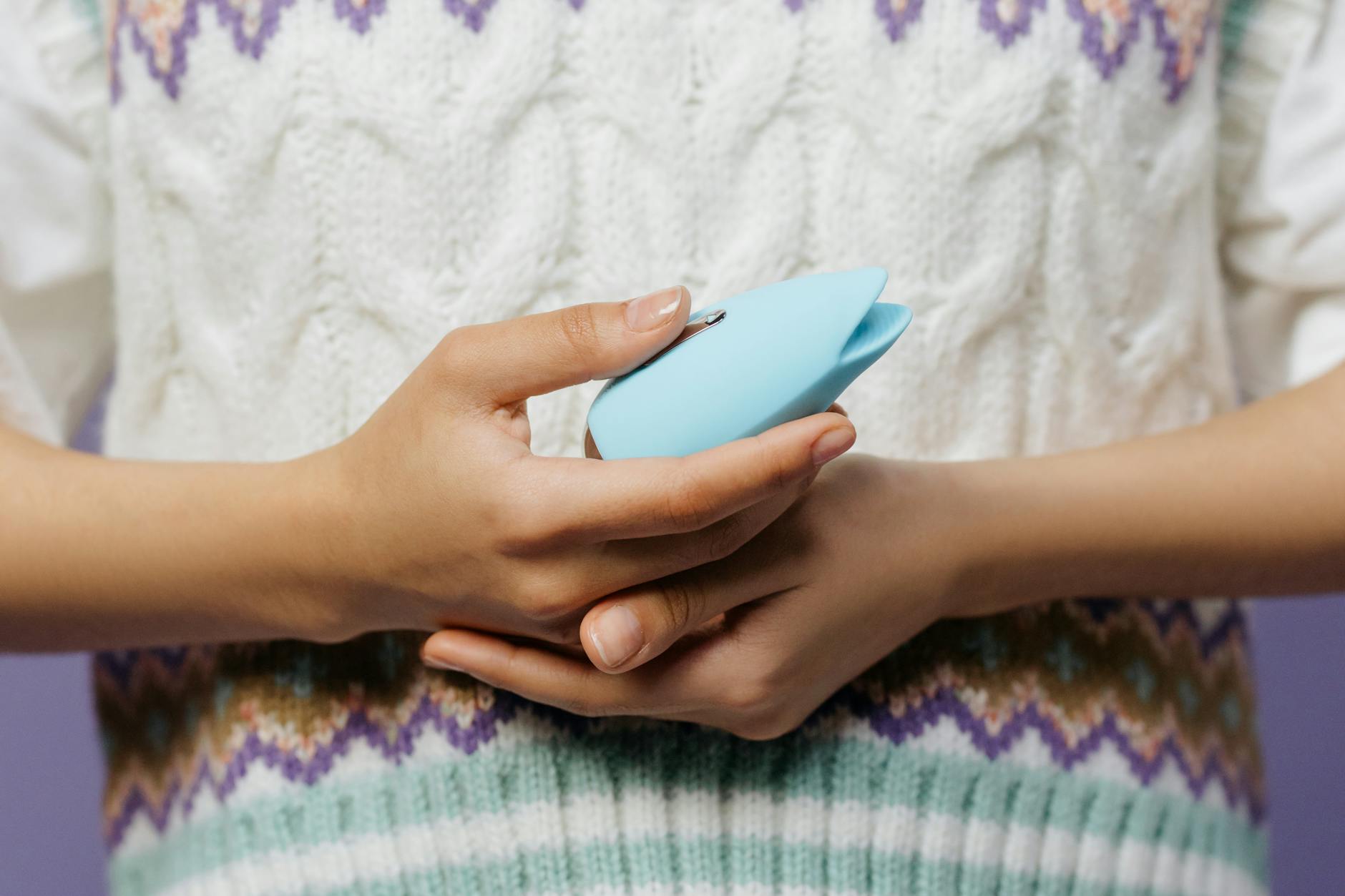
Air-suction clitoral vibrators like the Lem work differently than traditional vibration. They don't require the partner to maintain pressure or match a vibration pattern manually. The device does the work. That means your partner can focus on their own pleasure without managing yours, and you get consistent, uninterrupted stimulation.
Here's the practical win: if you're using a lemon clitoral vibrator during partnered sex, your partner can enter or continue whatever they're doing without worrying about knocking the device away or losing the angle. The air-suction tech holds contact.
That's massive. Most couples with traditional vibrators report that synchronization falls apart because someone moves, the toy shifts, and suddenly someone's lost their rhythm. With a clitoral vibrator like the Lem, once you find the position, it stays put.
The positioning that actually works for partnered play
There are three setups worth knowing about.
1. Face-to-face, one partner on top. You hold the lemon vibrator on yourself while your partner enters. Your free hand can hold them close. They can feel the vibration through the contact. This works best when the receiving partner has the vibrator because they control the pressure and angle. Your partner's job is to move at whatever pace feels good for them, not to sync with the vibrator.
2. Side-by-side or spooning position. One person uses the clitoral vibrator from behind while the other partner enters from the same angle. This position requires the least coordination. The vibrator hand has full freedom. Your partner's movement doesn't disrupt the device. This is often the easiest entry point for couples new to shared play.
3. Partner outside the traditional penetration role. One person uses the lemon vibrator on themselves while their partner provides non-penetrative stimulation. This might be kissing, caressing, manual stimulation elsewhere, or just being present. This setup removes the pressure to sync entirely and often produces the deepest pleasure for both people because there's zero performance anxiety.
How to actually sync without obsessing about timing
Here's what I tell couples: think of it as call and response, not a duet.
One partner starts with the clitoral vibrator at a low-medium setting. The other partner begins moving. The person with the vibrator then adjusts intensity or pattern based on what they're hearing, feeling, or seeing from their partner. Not to match perfectly, but to create momentum together.
A specific rhythm that works: the penetrating partner moves steadily for about 30 seconds while the other person with the lem vibrator stays at one setting. Then switch. The vibrator person increases intensity for 30 seconds while their partner adjusts their pace slightly upward. You're not chasing perfect synchronization. You're creating call-and-response waves.
This matters because arousal doesn't peak at the same moment for most couples. But pleasure can build in tandem if you're paying attention to each other's signals instead of staring at a clock.
The equipment question: why lemon vibrators beat other options here
A traditional wand vibrator requires one partner to hold it against the body throughout. That hand gets tired. The angle shifts. The other partner gets frustrated trying to work around it. A bullet vibrator often slips during movement or falls out during position changes.
A lemon clitoral vibrator or similar air-suction device? It stays where you put it. The seal holds. You can use one hand to guide it initially, then free up both hands. That's the game changer for simultaneous pleasure.
The suction sensation also tends to feel more intense and more localized than vibration, which means you often need less time to build arousal. That naturally brings your arousal timeline closer to your partner's without forcing anything.
The conversation you need to have first
Before you're in the moment, talk about what "simultaneous" actually means to each of you. Does one partner want to climax at the same moment? Or is it more about both partners feeling pleasure at the same time, even if orgasms land separately?
That distinction changes everything. If you're chasing simultaneous orgasms, you're fighting biology. If you're aiming for shared arousal and pleasure, you're working with it.
I also recommend one partner trying the clitoral vibrator solo first. No pressure, no partner watching. Figure out what feels good, what speeds work, whether you prefer patterns or steady sensation. Then introduce your partner to that knowledge. Don't hand someone a new device and expect them to intuitively know what you like.
When to abandon the sync and just take turns
Honestly? Sometimes simultaneous pleasure isn't the move. Some couples find that taking turns produces better sensation and closer connection.
One partner uses the lemon vibrator and comes first. Their partner then gets focused attention. There's no pressure to climax in tandem. Both people get dedicated time. Some couples report this actually feels more intimate because there's less performance anxiety.
You don't have to choose one forever. Some sessions you sync. Some sessions you alternate. The win is knowing what works for your bodies on a given night.
A note on emotional connection during partnered vibrator use
I work with couples who worry that introducing a toy into partnered sex means something's missing between them. That's backwards. A lemon clitoral vibrator is a tool that lets both people access deeper pleasure, not a replacement for partnership.
In fact, most couples report that using a toy together actually increases intimacy because both partners are focused on mutual pleasure instead of one person performing while the other receives passively.
The vulnerability of saying "here's what feels good for my body" and then letting your partner watch, help, and share in that? That's connection. The device is just the vehicle.
FAQ: Partnered pleasure with lemon vibrators
What if my partner and I climax at different speeds?
You don't have to climax at the same time. The goal of simultaneous pleasure is shared arousal and sensation, not synchronized orgasms. Focus on building arousal together, and let orgasms land when they land. If one partner climaxes first, they can pause and refocus on their partner, or keep going depending on what feels good. Most bodies can sustain pleasure even after orgasm.
Is it normal to feel awkward the first time using a clitoral vibrator with a partner?
Completely normal. You're introducing a new sensation, new dynamics, and new vulnerability. It takes two to three sessions before most couples feel comfortable. The key is checking in with each other afterward. What felt good? What was awkward? What do you want to try differently? Treat it like any other skill in partnership: it improves with practice and feedback.
How do I know if my partner is actually enjoying this or just going along with it?
Ask. Specifically. Not "Is this okay?" but "What's one thing that felt really good and one thing you'd want different next time?" That invitation makes space for honest feedback instead of automatic reassurance. If your partner isn't into partnered vibrator play, that's real information. Then you get to decide: Is this something you want to explore with a different partner, or are there other ways to share pleasure together?
Can I use a lemon clitoral vibrator during every type of partnered sex?
Mostly, yes. It works well with penetrative sex, manual stimulation, oral sex, and other forms of partnered pleasure. The main variable is positioning. Some positions make it harder to hold or access the vibrator. If something feels awkward, pause, adjust, and try again. Experimentation is the whole point.
What if my partner wants to hold or control the clitoral vibrator instead of me?
That's a different dynamic and worth exploring. Some couples find it incredibly hot when a partner controls the vibrator. Others find it distracting. You might take turns. The thing about a lemon vibrator is that it's small enough that either partner can hold it easily, so there's flexibility. Whatever feels good to both of you is the right call.
How do I introduce this idea without making my partner feel like I'm not satisfied?
Frame it as curiosity, not complaint. "I'm interested in trying X together" is different from "I need X because Y isn't working." Lead with pleasure, not problem. Most partners respond well to "I think this might feel amazing for both of us" versus "I'm not getting what I need."
The real truth about syncing pleasure
Most couples I work with discover that simultaneous pleasure isn't about perfect timing. It's about attention. Showing up to your partner's body. Noticing their breathing, their touch, their signals. Using a clitoral vibrator like the Lem doesn't replace that. It actually deepens it because you both get to experience fuller sensation while staying connected.
Start small. Pick one position. Try one rhythm. Talk after. Adjust next time. That's how partnerships work with pleasure, too.
References
- Gottman Institute. (2021). "The Sound Relationship House: How to Strengthen Your Relationship." Research on partner attunement and synchronized pleasure.
- Meston, C. M., & Frohlich, P. F. (2000). "The Neurobiology of Sexual Function." Archives of General Psychiatry. Evidence on synchronized arousal in couples.
- Komisaruk, B. R., & Whipple, B. (2005). "The Central Nervous System Response to Sexual Activity in Women with Complete Spinal Cord Injury." Journal of Sex & Marital Therapy. Research on pleasure and sensation in partnership.