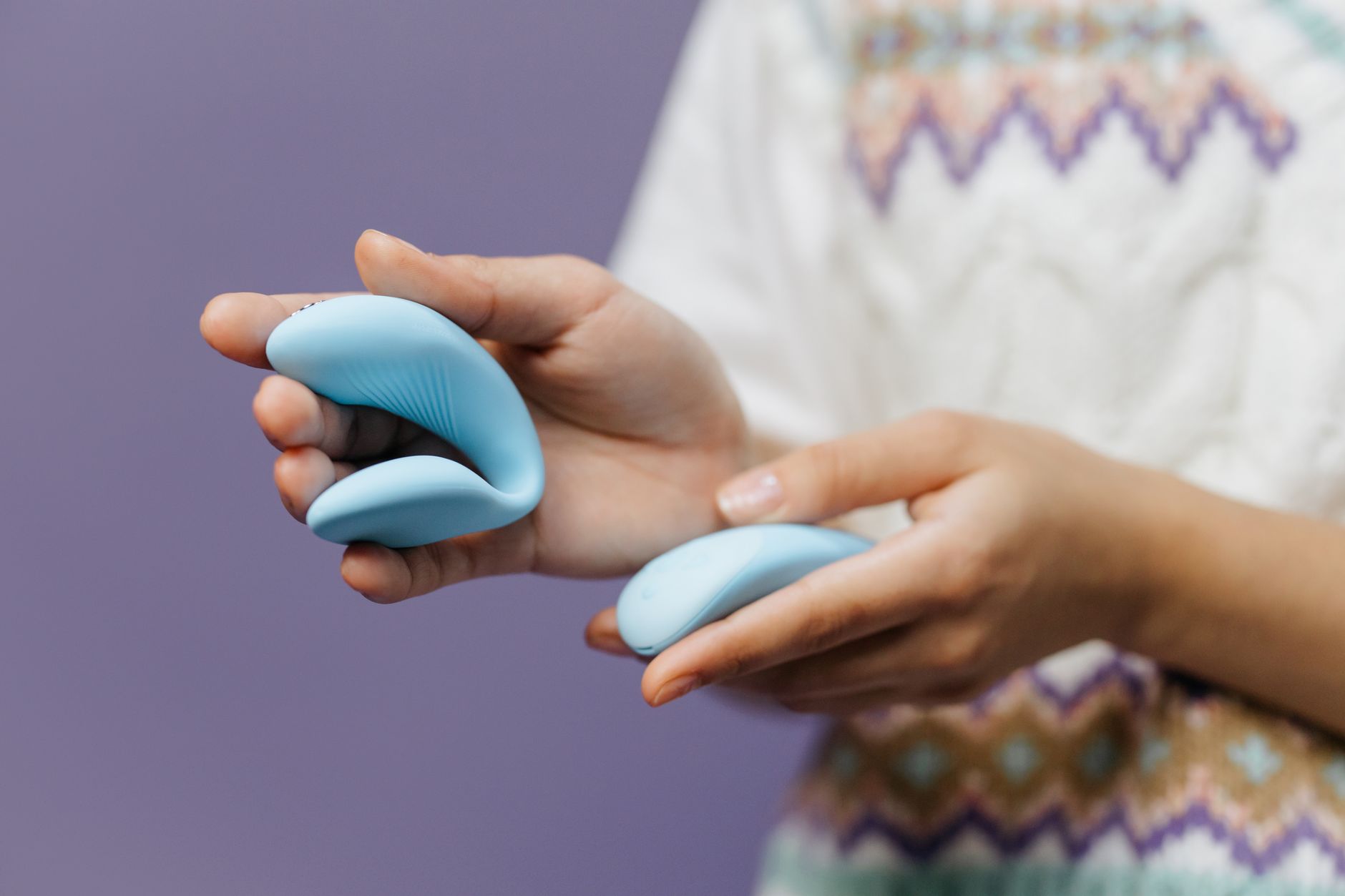
The moment you decide to try for a baby, sex stops being spontaneous and starts being a project. Your cycle becomes a spreadsheet. Your partner's timing matters more than your pleasure. And somewhere in that transition, the joy gets buried under ovulation strips and fertile window anxiety.
Here's the thing though: pleasure during fertility tracking isn't a luxury or a distraction. It's actually part of the biology. Orgasms increase blood flow to the reproductive organs, boost oxytocin, and can improve the conditions that sperm need to survive. You're not taking time away from trying to conceive by using a lemon vibrator. You're optimizing it.
When you're in the fertile window, the biological goal is clear. But your body doesn't know you're thinking about ovulation. It just knows whether it's aroused or not. Here's what happens when you're relaxed and climaxing:
Orgasms trigger uterine contractions that move sperm upward toward the egg. That wave of pleasure isn't incidental. It's a mechanical assist. People who orgasm during or shortly after sex have marginally higher conception rates, though the difference isn't dramatic enough to reduce sex to logistics alone.
What actually matters more is this: stress tanks fertility. Cortisol disrupts hormone balance, shortens luteal phases, and can delay ovulation entirely. If you're so focused on the timed intercourse window that you've stopped enjoying sex, you've lost the plot.
Using a lemon clitoral vibrator during this phase is actually a way to keep pleasure anchored in a conversation that's otherwise all logistics.
Your body changes every week. Knowing this changes how you approach clitoral stimulation.
Follicular phase (days 1-14 roughly). Estrogen is rising. Your clitoris is engorging with blood. Sensation is sharper. You want faster patterns on your lemon vibrator and you can probably handle more intensity. This is when you might naturally want more stimulation.
Ovulation window (days 12-16 roughly). Hormones peak. Your libido typically spikes here, and for good reason. Your body is primed. This is the phase where pleasure and conception timing actually align. Go with it. Use your lem vibrator, enjoy the orgasms, and let the biology work.
Luteal phase (days 17-28 roughly). Progesterone rises and estrogen dips. Your clitoris is less engorged. Sensation might feel duller. You might need longer warm-up time or different patterns on the vibrator. Many people find gentler, longer sessions feel better than quick, intense ones.
Here's what nobody prepares you for: the first few months feel exciting. By month four or five, sex becomes another item on a to-do list. Your partner might feel performance pressure. You might feel resentful that you're being touched on a schedule rather than a whim.
A lemon vibrator solves part of that. You can take your pleasure into your own hands, literally. This takes the pressure off your partner to perform on a timeline while also keeping pleasure in the equation.
The practical move: use it solo before or after partnered sex. Not as a replacement, but as a way to keep your own pleasure separate from the conception project. When your orgasm isn't dependent on your partner's ability to be aroused on day 14, sex stops being a performance and becomes something you're both choosing to do.
Fertility awareness means paying attention to cervical fluid. During the fertile window, your cervix produces more mucus. That's good for conception but it also matters for toy safety and comfort.
When you're in the fertile window with abundant cervical fluid, you might skip additional lubricant entirely. Just check: if your natural lubrication is plenty, water-based lube becomes optional. If you do use additional lube, stick with water-based. Silicone-based lubes can damage the Lem's silicone body.
During other phases of your cycle when natural lubrication is lower, water-based lube helps a lot. This isn't about damage. It's about comfort and sensation. More glide means less friction irritation, especially if you're using the toy multiple times in a week.
One study found that women in high-stress jobs took significantly longer to conceive. Another found that cortisol levels predicted time to pregnancy more accurately than most other biomarkers. This isn't woo. Stress hormones actually suppress reproductive hormones.
So here's the paradox: the moment you decide to try, you become hyperaware of every cycle day. You track, you test, you worry. That anxiety can actually work against you.
Using a lemon vibrator regularly, even outside the fertile window, is one way to manage that cortisol spike. Orgasms lower cortisol and boost oxytocin, your calming hormone. A 15-minute session with your lem vibrator does more for your actual reproductive health than obsessively checking your temperature chart.
I tell clients: schedule pleasure the way you schedule sex. Not on day 14 necessarily. Just regularly. Solo, with a partner, doesn't matter. The goal is to keep your nervous system regulated while you're navigating something that feels high-stakes.
If you're trying with a partner, this affects them too. Timed intercourse can crush desire. Some partners feel like they're performing on demand. Some feel useless because the biological window is narrow and fixed.
Honestly though? Using your own vibrator takes that pressure completely off. Your partner doesn't have to be your sole source of pleasure during a window that's stressful for both of you. They can focus on connection rather than performance. You keep your pleasure alive and independent.
If your partner is interested in being involved, they can use the vibrator on you, which changes the dynamic entirely. Suddenly it's not about timing. It's about play. But if you want it solo, that's equally valid.
The conversation worth having: "I need to keep pleasure separate from baby-making." Most partners understand that immediately.
If you've been trying for 12 months (or 6 months if you're over 35) without conception, you and your partner should see a fertility specialist. That conversation isn't about stopping pleasure. It's about making sure there isn't a physiological barrier you're not seeing.
Intersex factors like low sperm count, ovulation issues, or blocked tubes won't be solved by pleasure work, but they're treatable. The earlier you know, the better.
Until then? Your lemon vibrator isn't a magic tool. It's a way to keep yourself grounded while you navigate something that's genuinely stressful.
Orgasms increase uterine contractions and blood flow to reproductive organs, which can help sperm move toward the egg. They also lower cortisol, which supports hormone balance. So yes, orgasms matter. The vibrator is just the delivery mechanism. Whether the stimulation comes from a partner or a toy doesn't change the biology.
No. Silicone toys are inert. They don't interact chemically with sperm or the reproductive tract. What matters is lubrication type. If you use a silicone-based lube with your lem vibrator, switch to water-based if you're trying to conceive, because silicone lubes can affect sperm motility slightly. But the vibrator itself is fine.
You can do both. Using it solo before partnered sex keeps you aroused and relaxed, which actually improves conception odds. Using it outside the fertile window keeps your nervous system regulated and stress down, which supports fertility indirectly. Neither is wrong. Do what feels right.
No, and they shouldn't. Pleasure timing is personal. Some people want more clitoral stimulation during ovulation when their body naturally craves it. Others want it during the luteal phase as stress relief. Let your body guide you, not an algorithm.
No. Your cervical fluid is produced by your cervix in response to hormones, not stimulation. A vibrator changes nothing about that. What it does is allow you to notice fluid more clearly because you're more aware of your body during arousal.
Partially. Orgasms absolutely lower cortisol and improve mood. But if you're months into trying without success and anxiety is high, consider talking to a therapist too. Pleasure is one tool. Professional support is another. Both matter.
Trying to conceive changes everything about how you relate to sex. The clock becomes real. The stakes feel high. And somewhere in that, you can lose the part of intimacy that's actually supposed to feel good.
Your lemon vibrator isn't going to make you pregnant. But it might keep you sane while you're waiting. It might keep pleasure anchored in a conversation that's otherwise all logistics. And that matters.
If you're navigating this transition with a partner, consider having a honest conversation about keeping pleasure alive separately from the conception project. If you're trying solo, give yourself permission to use your vibrator whenever it serves you, not just during the fertile window.
The biology works best when you're relaxed. And you're most relaxed when you're not treating sex like a job.
Want to talk through your specific situation? Reach out to us. We're here to help.