Let's name what's actually happening
You and your partner haven't had a real conversation about sex in months. Maybe longer. Not because the desire is gone, but because the words are stuck somewhere between shame, logistics, and the fear of saying the wrong thing. So you don't say anything at all. The silence hardens into routine, and routine becomes distance.
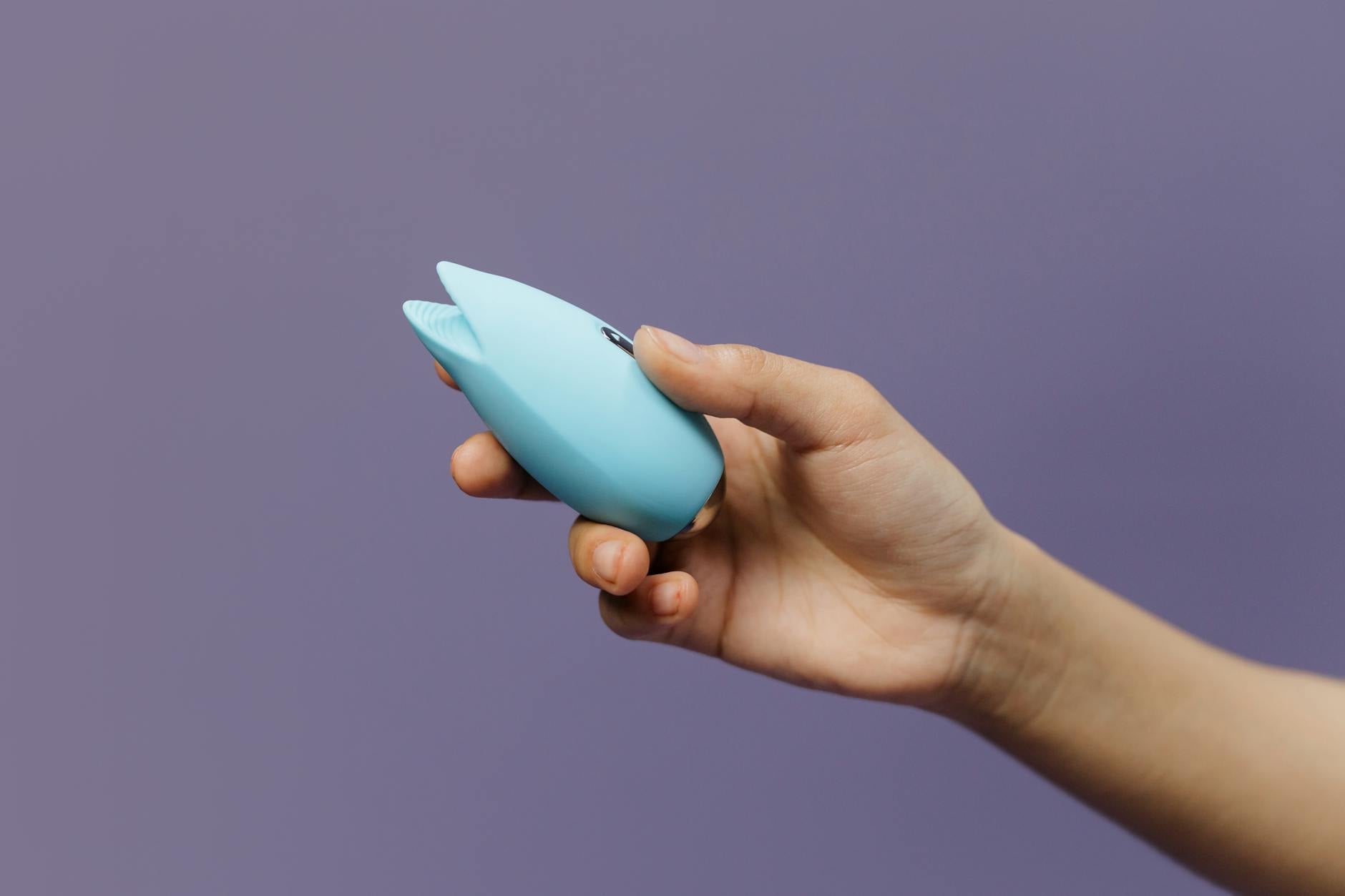
Here's what I see in my practice: couples who've lost the language for pleasure haven't lost the capacity for it. They've just forgotten how to talk about it without the conversation becoming either a negotiation or an argument. A lemon vibrator, used intentionally, can actually rebuild that bridge before the talking has to start.
It sounds counterintuitive. But sex is communication. When words fail, sensation doesn't have to.
Why communication breaks down around pleasure
Three patterns show up repeatedly.
Pattern one: You've never actually named it. Many long-term partners have never sat down and said, "I want this. I need that. Here's what feels good." Instead, you've circled around the topic through hints, timing, and body language. After five years of that, suddenly being direct feels exposing in a way it shouldn't, but does.
Pattern two: Earlier rejection created a wall. One person initiated, got turned down, and decided it was easier not to try again. Over time, that single "no" metastasizes into a blanket assumption. Initiating starts to feel dangerous. Desire gets quieter.
Pattern three: Life has fragmented you. Work stress, parenting, logistics, or grief has fractured the intimacy you once had. Sex feels like adding one more task to an overwhelming list. Talking about it feels like admitting the relationship needs fixing, and you're too tired to fix anything right now.
None of these patterns mean your partner doesn't want you. They mean the pathway has gotten overgrown.
How touch becomes the first language again
Here's the neurology that matters: when verbal communication has broken down, the body still remembers how to listen. Touch activates different neural pathways than conversation. It bypasses the thinking brain and goes straight to the nervous system. That's why couples who can't talk sometimes can still feel.
A lemon clitoral vibrator, introduced without pressure or expectation, can serve as a physical statement. It says: I want you. I want us. I'm not waiting for permission to try again.
This is not about coercion or surprising your partner into pleasure. It's about creating a moment where vulnerability becomes easier because the pressure is off. You're not asking for a conversation. You're inviting an experience.
The shift matters.
How to actually do this
Step one: Set the stage without announcing it. Pick a time when you're already close. Not a Tuesday morning before work. Not after an argument. A moment when there's already some baseline ease. Dimmed lights. No phones. Some kind of touch already happening, even if it's just sitting together.
Step two: Let the toy do some of the asking. Bring the lemon vibrator into foreplay as you normally would, but do it calmly. Not like you're introducing a foreign object, but like it's a natural extension of what you're already doing. The air-suction pattern on most lemon sexual toys feels intuitive to the body. It doesn't require a learned response.
Step three: Slow down your own arousal. This is the part people skip. If you're anxious about the moment landing, your partner feels that tension. You have to settle your own nervous system first. Breathe. Notice how your partner's body is responding, not whether they're responding on your timeline. That distinction changes everything.
Step four: Let pleasure dictate the pace. Don't perform. Don't watch for approval. Just follow the sensations. If your partner pulls away, you pause without hurt or commentary. If they lean in, you trust that. Your lemon clitoral vibrator becomes a translator. It's speaking on behalf of desire without the script.
The actual conversation about what happened, what felt good, what's next. That comes later. Maybe immediately after. Maybe tomorrow. But the body has already said yes, and that's the foundation.
When this approach softens the resistance
What I see happen most often: a partner who was closed off physically becomes curious. Not because you've convinced them with words, but because their nervous system has experienced something different than the pattern they were defending against. The vibrator isn't the point. The point is that you showed up for pleasure in a way that didn't require them to already be ready.
This is especially true if earlier rejection was the pattern. When someone has learned that initiating leads to hurt, bringing pleasure back into the body has to feel different than initiation. It has to feel like a gift, not a demand.
A lemon vibrator works here because it's not framed as something you need from them. It's something you're offering to them. That reframing is small and enormous at the same time.
What to do when the moment finishes
The worst thing you can do after reconnecting physically is force an immediate conversation about feelings. Your partner's nervous system is still settling. Words will sound clinical, interrogative, high-stakes.
Instead: stay present. Touch without the vibrator. Let there be quiet. If they want to talk, they'll start. If they don't, that's data too, and it's not a rejection. It might just be that their nervous system is still processing the shift.
The conversation about pleasure, about what you both want, about the silence that's been there. That conversation becomes possible now because the body has broken the logjam. You're not starting from shame or distance anymore. You're starting from a moment where desire was present.
That changes everything about how the words will land.
When you need actual verbal communication
Let's be clear: a lemon vibrator is not a substitute for talking. It's a conversation starter. Eventually, you do need words. But those words become less terrifying when your body already knows the answer.
If the moment opens up and your partner wants to talk about what felt good, what they've been wanting, what scared them about asking. Listen without defending. Without explaining why you didn't know. Just listen. Your job is to make it safe for them to say the true thing.
If your partner stays quiet, that's a sign that maybe there's more underneath. Grief about the distance. Resentment about something else. Numbness that's not actually about sex. In those cases, the vibrator has done its job by creating the opening. The rest might need more time, or it might need a couples therapist who can help you both find the language that got lost.
There's no shame in that. Sometimes the damage to communication is too deep for touch alone to heal.
The role of a lemon sucker in rebuilding
If you're considering a lemon clitoral vibrator as part of this reconnection, remember that the tool itself carries no judgment. It's not saying your partner was wrong for stepping back. It's not saying you were wrong for trying to protect yourself from more hurt. It's simply saying: here's another way forward.
The lemon vibrator, with its intuitive suction design, feels less clinical than other adult toys. Many partners who were skeptical find themselves drawn to it precisely because it doesn't feel like a "toy" in the mechanical sense. It feels more like an extension of desire. Like touch, but with more intention.
That intention matters when communication is fragile.
FAQ
What if my partner feels hurt or rejected when I introduce a vibrator?
Pause. Don't defend the vibrator. Listen to what they actually heard. Often, rejection of the toy is really about something else: feeling inadequate, fearing abandonment, or sensing that you're frustrated with them. Separate the vibrator from the relationship issue. Say clearly: "I'm not bringing this because you're not enough. I'm bringing this because I want us to feel close again." Then listen to what the real fear is.
How do I know if my partner is actually interested or just going along with it?
Watch their body, not their face. If they're tense, holding their breath, or physically distant, they're complying, not participating. Pause. Create more space. Sometimes interest arrives after fear settles, but not if you push. A lemon sexual toy should enhance comfort, not override it. Your partner's nervous system is the real authority here, not your timeline.
Can using a vibrator together actually fix broken communication?
Not on its own. But it can break the freeze. If communication has completely shut down, the body sometimes leads where words are too scary to go. Once that nervous system barrier is lower, words become possible. Think of the vibrator as defrosting, not solving. The solving comes after, through actual conversation and often through professional help.
What if my partner wants to use the lemon vibrator but we still don't talk about anything afterward?
That's data. It might mean they were ready for pleasure but not for vulnerability. It might mean they need more time. It might mean there's deeper hurt that one physical moment can't bridge. Don't assume silence means failure. Sometimes reconnecting physically creates space for conversation to happen later, when defenses are lower. Give it time. If silence continues for weeks, that's a sign you both need help from someone outside the relationship.
Is it ever too late to rebuild communication this way?
Rarely. As long as both partners are alive and there's even a flicker of desire to reconnect, the body can move before the mind is ready. That said, if one person has checked out entirely, if there's active resentment or an affair, or if the relationship has become unsafe, a vibrator isn't going to fix it. You'd need actual therapy. But for couples where the distance is about fear and silence, not betrayal, this approach often works.
How soon after introducing a vibrator should we talk about the bigger communication issues?
Not immediately. Let the moment settle. Give it at least a day. You want to talk from a place where the nervous system isn't still processing pleasure and vulnerability at the same time. When the conversation does happen, start small. "That felt nice." "I'm glad we did that." "I've missed this." Build from there. You don't need to solve everything in one night.
The bridge is yours to walk
Couples who've lost the language for pleasure don't need a lecture about vulnerability. They need a moment where desire feels possible again without the weight of all the words that haven't been said. A lemon vibrator, used thoughtfully, can create that moment.
The reconnection it offers is real. The vulnerability it invites is real. And when you're both ready, the conversation that follows will carry the weight of something the body already knows to be true: you still want each other. Everything else builds from there.
If you're struggling to even start that conversation, or if the silence has hardened into something deeper, consider reaching out for support. A couples therapist trained in intimacy work can help you find the language that got lost. You don't have to rebuild this alone.
For more on navigating intimacy when patterns have shifted, explore how to use a lemon vibrator when anxiety interferes with pleasure or read about rebuilding intimacy after a relationship break. Both journeys start with small moments of reconnection.